
Basement Waterproofing in Austintown, OH
A lot of Austintown homes were built in the 1950s, 60s, and 70s, and their original basement drainage systems are still in place. Drain tile does not last forever. When it clogs or collapses after fifty-plus years, water that used to be carried away starts coming in instead.
Meta title: Basement Waterproofing in Austintown, OH | Honest Fixes Meta description: Basement leaking in Austintown, OH? Mid-century homes here have aging drain tile and old sump systems. Get an inspection. Call (330) 555-0147.
A lot of Austintown homes were built in the 1950s, 60s, and 70s, and their original basement drainage systems are still in place. Drain tile does not last forever. When it clogs or collapses after fifty-plus years, water that used to be carried away starts coming in instead.
Mahoning Basement Dry Co provides basement waterproofing in Austintown for exactly this situation: aging systems in mid-century homes that need honest diagnosis and real fixes. Call (330) 555-0147 and we will come see what your basement is doing.
Start with basement waterproofing in the Youngstown area if you are comparing options.
Why Austintown Basements Leak Now, After Decades of Staying Dry
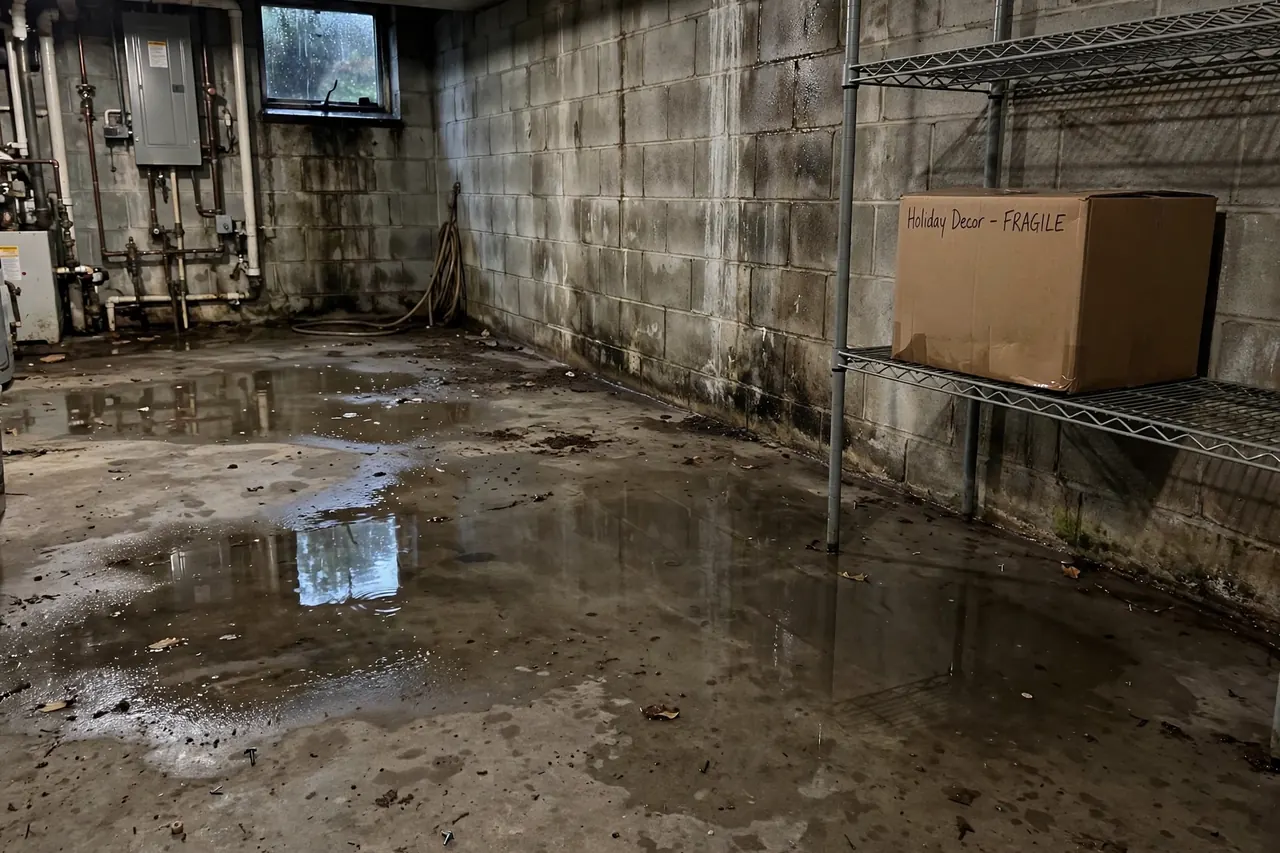
If your basement stayed dry for years and only recently started leaking, the cause is usually not something new. It is something old finally giving out.
Original drain tile wears out. When your home was built, a drain tile, a perforated pipe, was buried around the foundation footing to carry groundwater away. Those pipes silt up, crush under soil pressure, or clog with roots over decades. Once the tile stops moving water, groundwater rises and looks for another way in: through your floor joint, your walls, or both.
Original sump systems are past their prime. Many mid-century Austintown homes have a sump basin and pump installed decades ago. Pumps wear out, floats stick, switches fail, motors burn out. A dead pump in a finished basement can mean inches of water before anyone notices, especially if the basement is a laundry room or storage area nobody visits daily.
Mid-century walls show their age. Poured and block walls from this era are solid, but sixty years of freeze-thaw cycles open up hairline cracks, and the mortar in block walls weathers. A crack that was dry for decades can start weeping in a wet spring.
Finished basements hide the early signs. Many Austintown ranches have finished or partially finished basements. Paneling and carpet hide seepage until the damage is obvious, warped baseboards, buckling carpet, a musty smell that never leaves. By the time you see it, the water has been coming in for a while.
Waterproofing Services Available in Austintown
Interior drainage systems in Austintown
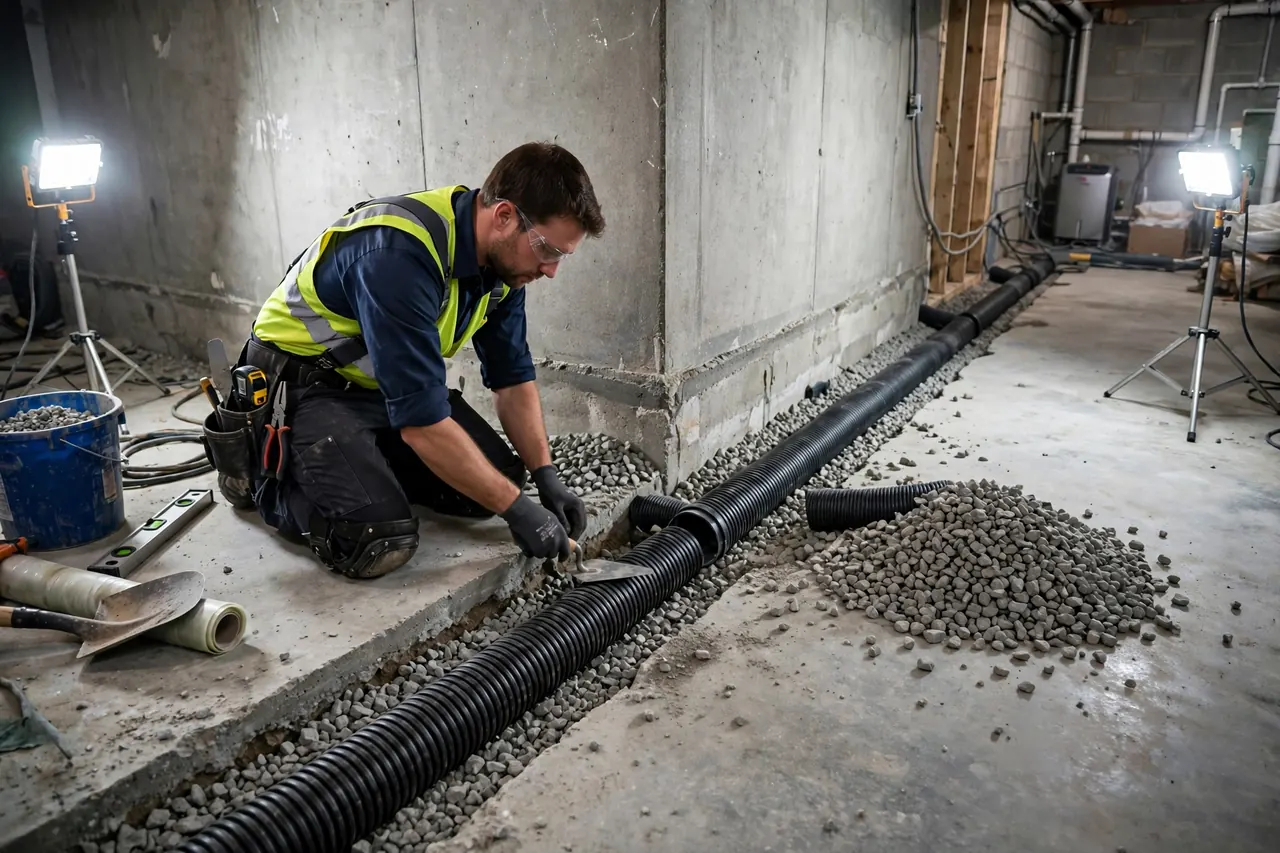
when the original exterior drain tile has failed, an interior perimeter drain gives water a new path to a sump pump. Often the most practical fix for mid-century homes.
02Sump pump installation in Austintown
replacing worn-out pumps and undersized basins with a properly sized system. Battery backup is worth considering for a home that has relied on one pump for decades.
03Foundation crack repair in Austintown
injecting cracks in poured or block walls. We describe what the repair does and do not declare any foundation structurally sound, that call belongs to a structural engineer.
04Basement dehumidification in Austintown
for basements that stay humid between leaks. Controls moisture in the air; does not fix leaks by itself.
05Crawl space waterproofing in Austintown
drainage and vapor barriers for crawl-space sections common in some mid-century layouts.
06Gutter and downspout help in Austintown
extending downspouts away from the foundation so roof water stops adding to the load on an aging system.
The Water Problems Austintown Homeowners Actually See
A basement that was dry for years and suddenly is not
This is the most common story we hear in Austintown. Nothing changed about the house, the drain tile just finally gave out. The fix is giving water a new way out, not patching the symptom.
Water coming up through the floor, not the walls
When exterior drain tile clogs, pressure builds under the slab and water rises through the cove joint and floor cracks. Wall paint and patch compounds cannot touch this, the water is coming from below.
A sump pump that runs constantly or not at all
A pump cycling every minute is working against rising water with no backup plan. A pump that never runs during rain is probably dead. Either way, a decades-old pump is not something to trust through another storm season.
Rust, stains, and white crust on walls
Rust-colored stains near the floor and white efflorescence on block walls both mean water has been moving through, possibly for a long time. These are clues about where water enters, and they help us place drainage correctly.
Musty finished basements
Damp carpet, warped paneling, and a smell that air fresheners cannot fix all point to chronic moisture. The general guidance: dry the space, find where water enters, fix that first, then deal with the finishes. We do not make medical claims about mold; we talk about moisture and cleanup.
What Happens When Drain Tile Dies
Drain tile fails quietly. The perforated pipe buried around your footing spends decades collecting silt, and tree roots find the water inside it. Clay tile cracks under soil pressure; older pipe can crush or deform. None of this announces itself. The tile just moves a little less water each year until one wet spring it moves effectively none, and groundwater rises to find your basement instead.
The house gives hints before the flood. A sump pump that runs longer each spring, dampness creeping along the cove joint, efflorescence spreading across block walls, these are early signs the exterior tile is no longer carrying its share. By the time water is on the floor, the tile has usually been failing for years.
Digging it up is rarely the answer. Replacing decades-old tile means excavating the full perimeter, expensive, disruptive, and hard on landscaping, driveways, and patios. That is why interior drainage has become the standard fix for mid-century Austintown homes: it gives water a new, reliable path to the sump without tearing up the outside of the house.
What to Watch for This Season in Austintown
Spring is when dead tile reveals itself. Watch for new seepage as the ground thaws and saturates, this is the season old systems fail openly.
Summer is the best repair window. Dry ground, easy scheduling, and the new system in place before fall rains. Do not wait for the next spring surprise.
Fall: test the sump pump before winter. Pour water into the basin and make sure it kicks on. A dead pump discovered in January is a crisis; a dead pump discovered in October is a Saturday fix.
Winter: keep the discharge line from freezing shut, and watch for new cracks as the ground freezes and thaws around aging walls.
How We Work
No scare tactics, no invented credentials, no pressure.
We inspect first
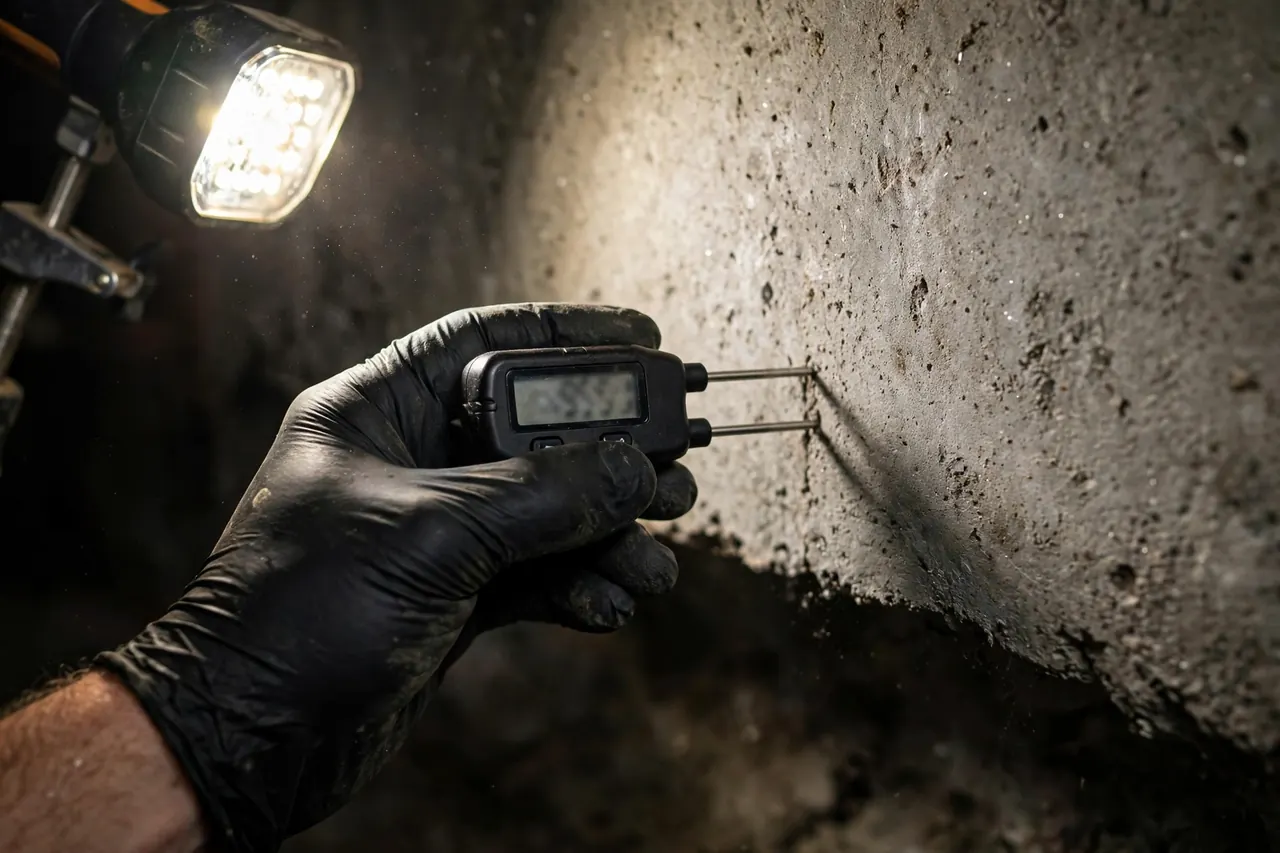
We walk the basement, check walls and floor, look at the existing sump and drainage, and check grading and downspouts outside. We find the actual entry points before recommending anything.
We explain in plain language
Where is the water coming from? Is the old drain tile the problem? What would fix it, and what would be overkill? You get straight answers.
We put it in writing
Any work is described clearly in writing, what we install, what it does, and what it does not do. We never promise "lifetime guarantees" or "permanent" fixes. We describe the system honestly.
What Happens After You Contact Us
Call (330) 555-0147 and describe what you are seeing, when the water shows up, where, and whether your sump pump is working. We schedule an on-site visit.
On the visit we check the basement, the existing pump and drainage, and the outside grading. Then we lay out your options in plain terms, with everything written down. You take your time and decide. There is no same-day sales pitch.
Get Your Austintown Basement Checked
Mid-century systems do not last forever, but the fix is straightforward once someone finds where the water is coming from. Mahoning Basement Dry Co serves Austintown with inspection-first, honestly described waterproofing work. Call (330) 555-0147 and tell us what you are seeing.
Basement waterproofing in Austintown - FAQs
Straight answers for Austintown homeowners.
Most likely the original drain tile has clogged or collapsed, or the original sump pump has failed. These systems have a lifespan, and mid-century homes in Austintown are reaching the end of it. The house did not change, the drainage did.
Exterior drain tile can sometimes be repaired, but it usually means excavating around the foundation, expensive and disruptive for a system that is already decades old. Interior drainage is often the more practical path. We will tell you honestly which makes sense for your home.
Pour a bucket of water into the basin. If the pump does not kick on, the float or switch may be stuck, try gently moving the float. If it still does nothing, or if it runs but never shuts off, it needs attention. A pump that old deserves replacement, not another patch.
It will help with damp air and musty smells, but it will not stop water from entering. Think of it as step two: fix the water entry first, then control the humidity.
Yes, waterproof first, finish second. Finishing over an unresolved water problem hides leaks until they have damaged the new work. Fix the water entry, confirm the basement stays dry, then build.
It varies, soil conditions, root intrusion, and installation quality all matter. But tile installed during the mid-century building boom is now decades old, and that is past the practical life of many of those systems. If your home still runs on its original tile, plan as if it is living on borrowed time.
Sometimes. A camera can reveal breaks, root masses, and heavy silt in an accessible tile line, but many old tiles are collapsed, buried too deep, or simply unreachable. The inspection shows us what it can. What matters most is where your water is entering now, and how to give it a better path out.
Also serving nearby towns
Water in your Youngstown basement?
Call now, tell us what your basement is doing, and we’ll walk you through your options. No pressure.