
Gutter & Downspout Services in Youngstown, OH
Each of these saturates the soil against the foundation. In Youngstown's clay soil, that water does not drain away, it sits, builds hydrostatic pressure, and pushes into the basement. Fix the gutter problem and you often reduce the basement problem dramatically, sometimes entirely.
What’s included
Our gutter and downspout work focuses on the water-management side, what protects your foundation:
- Gutter cleaning and inspection , removing debris, checking slope, finding the leaks and sags
- Gutter repair , resealing seams, re-securing sagging sections, replacing damaged segments
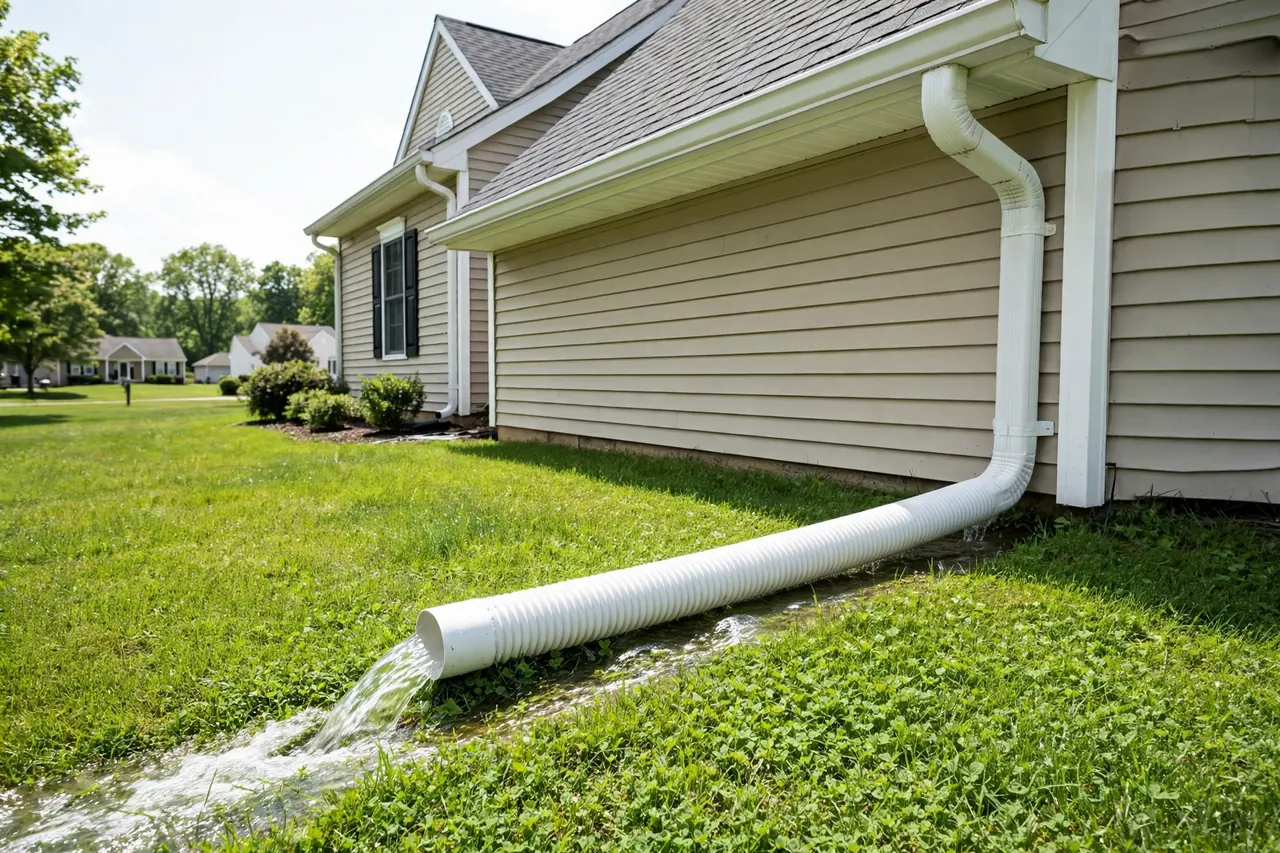
- Downspout extensions , above-ground or buried, routed to discharge well away from the foundation
- Underground drain checks , testing whether buried downspout lines are still flowing or clogged
- Grading assessment , checking whether soil slopes toward or away from the house at the foundation line
- Splash blocks and grading corrections , simple, effective fixes where soil has settled against the foundation
We are a waterproofing company, not a full roofing-and-siding contractor. If your gutters need complete replacement with new seamless systems, we will tell you, and we can still handle the extensions and drainage that protect the basement.
How the work goes
Call (330) 555-0147
Tell us about the basement water and what your gutters look like, or if you have no idea, that is fine too.
Roofline and foundation inspection
We check gutters, downspouts, extensions, grading, and where water goes during rain. We also check the basement to see if water entry matches the gutter problems.
Honest findings
If gutters and grading explain the water, we will say so, and the fix may be a few hundred dollars, not a few thousand. If groundwater is also involved, we will explain both parts.
Written scope and price
Extensions, repairs, grading corrections, itemized and approved by you first.
The work
Most gutter and extension jobs are completed in a day.
Rain check guidance
We tell you what to watch for in the next heavy rain so you can confirm the fix worked.
Timeline Expectations
- Inspection: one visit, roofline, foundation line, and basement together
- Gutter cleaning and minor repairs: usually a single day
- Downspout extensions (above-ground): often completed the same day as inspection findings
- Buried extensions and grading corrections: one to two days depending on scope
- Dry wells: typically one to two days
Gutter and grading work is the fastest waterproofing-adjacent work there is, and the cheapest. There is rarely a reason to delay it.
Can Gutters Cause Basement Leaks?
Yes, directly and commonly. Here is how roof water becomes basement water:
- Clogged gutters overflow. Leaves and debris block the gutter, and rain sheets over the edge, landing right at the foundation instead of in the downspout.
- Short downspouts dump at the foundation. A downspout that ends two feet from the house delivers all of its roof section's water into the soil against the foundation wall.
- Broken or sagging gutters leak at seams. Water dribbles down the fascia and siding, soaking the soil at the foundation line.
- Missing gutters. Some homes, especially older ones or those with certain roof designs, have no gutters on some sides. Every storm dumps roof water straight down at the foundation.
- Underground drains fail. Many homes have downspouts tied into buried drain lines. After decades, those lines clog with roots and silt, and nobody knows until the basement floods.
Each of these saturates the soil against the foundation. In Youngstown's clay soil, that water does not drain away, it sits, builds hydrostatic pressure, and pushes into the basement. Fix the gutter problem and you often reduce the basement problem dramatically, sometimes entirely.
How Far Should Downspouts Extend From the House?
At least 6 feet, and 10 feet is better. This is the single most impactful gutter-related fix for basement water, and it costs very little.
The logic is simple: water discharged at the foundation soaks the exact soil that presses against your basement walls. Water discharged 10 feet out soaks soil that has no contact with your foundation. Same rain, completely different outcome.
Extension options:
- Above-ground extensions, simple, inexpensive, removable for mowing; the most common fix
- Hinged extensions, flip up for lawn care, flip down for rain
- Buried extensions, pipe run underground to a pop-up emitter or daylight outlet 10+ feet out; cleaner look, more work to install
- Dry wells, buried pits filled with stone that collect and slowly disperse downspout water away from the house
We recommend based on your lot: slope, soil, and where water can safely go without reaching a neighbor's property.
Will Fixing Gutters Stop My Basement Leak?
Sometimes, and it is always the first thing to check. Here is the honest decision tree:
Gutters/grading alone may solve it when:
- The basement leak started after gutters clogged or a downspout broke
- Water appears on the wall directly below a problem downspout
- The leak is seasonal and tracks with heavy rain, not with groundwater levels
- The basement is otherwise dry and the foundation is sound
You likely need interior waterproofing too when:
- Water comes up through the floor or cove joint even in moderate rain
- The basement leaks with no obvious gutter problem
- Neighbors with good gutters still have water (points to high water table)
- An old sump pit fills rapidly regardless of gutter condition
The right order: fix gutters, downspouts, and grading first, it is cheap. Then see what water remains. Whatever is left is the groundwater problem that interior drainage and a sump pump handle. Doing it in this order means you never pay for waterproofing to fight water that gutters could have handled.
The Roof-Water Math (Why This Matters So Much)
One inch of rain on 1,000 square feet of roof produces about 620 gallons of water. Scale that to a typical Youngstown home:
- 1,200 sq ft roof, 1 inch of rain: ~740 gallons
- 1,500 sq ft roof, 1 inch of rain: ~940 gallons
- 1,500 sq ft roof, 3-inch storm: ~2,800 gallons
Now imagine a downspout dumping its share, hundreds of gallons, into the clay soil within two feet of your foundation, in a single afternoon. Clay absorbs water slowly, so most of it sits there, pressing inward. This is not a gutter problem in the abstract. It is hundreds of gallons of water, delivered to the worst possible spot, every time it rains hard.
Proper gutters with 10-foot extensions move that same water to soil that does not touch your house. The rain does not change. The destination does.
Benefits of Proper Gutters and Downspouts
- The cheapest waterproofing available. Extensions cost a fraction of any interior system, and sometimes eliminate the need for one.
- Less load on your sump pump. Every gallon diverted at the roofline is a gallon your pump never has to move.
- Reduced hydrostatic pressure. Drier soil against the foundation means less pressure pushing water (and walls) inward.
- Less soil erosion. Controlled discharge stops the trenches and washed-out beds that form under bad downspouts.
- Protects siding and fascia. Overflowing gutters rot the wood they were meant to protect.
- Extends waterproofing life. Any interior system lasts longer and works less when surface water is managed first.
Gutter Types and Materials: Honest Tradeoffs
If your gutters need more than repair, here is the landscape:
Sectional gutters
Pre-cut sections joined together, the type on most older Youngstown homes.
Pros: cheap; available everywhere; easy to repair in pieces. Cons: every seam is a future leak; the most maintenance-heavy option.
Seamless gutters
Formed on-site in one continuous run per side, the modern standard.
Pros: far fewer leak points; cleaner look; less maintenance. Cons: higher upfront cost; requires professional fabrication and installation.
Materials
- Aluminum, the most common: affordable, rust-proof, lightweight. Dents more easily than steel.
- Vinyl, cheapest; easy DIY; but brittle in Ohio winters and fades in sun. A shorter-lived choice here.
- Steel, strong; handles heavy snow and ice loads well. Heavier, pricier, and can rust if the coating fails.
- Copper, beautiful and extremely long-lived. Very expensive, a luxury choice, not a waterproofing necessity.
Our take: for most Mahoning Valley homes, seamless aluminum is the practical sweet spot, durable enough for our winters, reasonable cost, low maintenance. We will tell you if your existing gutters are worth repairing or due for replacement.
Gutter Guards: An Honest Assessment
Gutter guards (covers, screens, or inserts that keep debris out) are heavily marketed. The honest version:
What they do well: reduce cleaning frequency, especially under heavy tree cover. Good guards keep out leaves and larger debris.
What they do not do: eliminate maintenance. Fine debris, seeds, and shingle grit still get through or build up on top. No guard handles Ohio's spring seed-drop and fall leaf-drop without any attention.
The cost question: professionally installed guards are a significant investment, compare it against the cost of twice-yearly cleaning over the years you will own the home. For heavily treed lots, guards often make sense. For open lots, regular cleaning is usually cheaper.
What we recommend: guards are optional; extensions and proper discharge are not. Spend on the water management first.
Grading: The Ground Side of the Equation
Gutters control roof water. Grading controls everything else, the rain that falls on the ground around your house.
The general rule: soil should slope away from the foundation, commonly cited as about 6 inches of drop over the first 10 feet. Walk your foundation line after rain: if water pools against the house or the soil visibly slopes toward it, grading is part of your problem.
Common grading problems in Youngstown:
- Settled backfill, the soil placed around the foundation during construction settles over decades, creating a trough against the house that collects water
- Flower beds against the foundation, raised beds and edging often trap water at the wall line
- Flat lots, some lots simply have nowhere for water to go; swales (shallow ditches) or buried extensions create the path
Simple fixes: adding soil to restore slope away from the house, regrading beds, and extending downspouts past the problem zone. These are among the cheapest effective waterproofing measures that exist.
Why Gutters Fail in Youngstown
Tree debris
Mature neighborhoods across the Mahoning Valley mean heavy leaf fall. Gutters clog every autumn without fail, and the spring rains arrive before many homeowners clean them.
Ice dams and winter damage
Ohio winters fill gutters with ice, which pulls them away from the fascia and breaks seals. Come spring, they leak at every joint.
Clay soil
Even modest gutter problems become basement problems here because clay holds the misdirected water against the foundation instead of draining it away.
Aging systems
Many area homes still run original sectional gutters from decades ago, leaking seams, wrong slope, and downspouts that end at the foundation.
Buried drain failures
The clay-tile or corrugated buried lines that many mid-century homes tied their downspouts into are often crushed or root-clogged by now. The downspout looks fine; the water goes nowhere.
Homeowners in Canfield and Poland with larger lots and mature trees, and in Boardman with 1960s–70s homes and original buried drains, should check their gutter discharge paths before assuming they need major waterproofing.
Not sure where to begin? Mahoning Basement Dry Co walks through the whole process. We do this work across the towns we serve around Youngstown.
Why Choose Mahoning Basement Dry Co
We follow the water
Most gutter companies do not think about basements. Most waterproofing companies ignore gutters. We do both because the water connects them.
Cheapest fix first
If extensions and grading solve your problem, we will recommend exactly that, not the bigger job.
Honest about limits
When gutters are not enough, we will tell you what else is needed and why, with the full waterproofing picture.
One call for the whole water path
Roof to foundation to sump pump, a single assessment covers everywhere your water travels.
Written scope, clear price
Approved by you before any work starts.
What affects the cost
These are typical industry estimates, not a quote from us:
- Gutter cleaning (single-story home): commonly $100–$250
- Downspout extensions (above-ground): commonly $50–$200 per downspout installed
- Buried downspout extensions: commonly $300–$800 per run depending on length
- Gutter repair (resealing, re-securing sections): commonly $150–$500
- Grading correction (soil added and sloped at foundation): commonly $500–$2,000 depending on scope
- Dry well installation: commonly $500–$1,500
Compare that to $4,000–$12,000 for interior drainage. This is why gutters come first, the return on every dollar is enormous when they are the actual problem.
When to Call a Pro
Call when:
- Gutters overflow, sag, leak at seams, or pull away from the fascia
- Downspouts end at or near the foundation with no extension
- Water pools against the foundation after rain
- The basement leaks and you have not checked the gutters and grading yet (start here)
- Buried downspout lines may be clogged, we can test whether they still flow
- Ice dams damaged the gutters over winter
Reasonable DIY: cleaning gutters (with proper ladder safety), adding above-ground downspout extensions, splash blocks, and minor grading touch-ups with bagged topsoil.
Call us first when: the basement is actively leaking and you are unsure whether gutters or groundwater are the cause, the inspection sorts it out before you spend money on either.
Serving Youngstown and 10 nearby towns
Common questions
Straight answers about gutter & downspout services in Youngstown.
Yes, clogged, broken, or short downspouts dump hundreds of gallons of roof water against the foundation every storm. In clay soil, that water sits, builds pressure, and pushes into the basement. It is one of the most common causes we find.
At least 6 feet, and 10 feet is better. Water discharged at the foundation soaks the soil pressing against your basement walls; water discharged 10 feet out does not. It is the highest-impact, lowest-cost fix in basement waterproofing.
Sometimes entirely, especially when the leak tracks with gutter problems. When groundwater or a high water table is also involved, gutters reduce the problem and interior waterproofing finishes it. Fix gutters first, then assess what remains.
At least twice a year, late fall after leaves drop, and spring before the heavy rains. Homes under mature trees may need three cleanings. Clogged gutters in spring are a top cause of the season's basement floods.
Those buried lines are often clogged or crushed after decades, especially the old clay-tile and thin corrugated types. We can test whether yours still flow. A downspout connected to a dead buried line is the same as no downspout at all.
They work together. Gutters control roof water; grading controls ground water flow. Soil should slope away from the foundation, if it slopes toward the house, even perfect gutters cannot fully protect the basement. We assess both.
Seamless, for most homes. Fewer seams mean fewer leaks and less maintenance. Sectional gutters are cheaper upfront and easier to repair in pieces, but every joint is a future drip point. In Ohio's freeze-thaw climate, fewer joints is a real advantage.
They reduce cleaning frequency but do not eliminate maintenance, fine debris still accumulates. They make the most sense under heavy tree cover. Compare the installed cost against years of twice-yearly cleanings before deciding. Guards are optional; proper downspout extensions are not.
The commonly cited guideline is about 6 inches of drop over the first 10 feet away from the foundation. The practical test: after rain, no water should pool against the house. If it does, the grading needs correction regardless of exact measurements.
Above-ground extensions are cheap, easy to inspect, and easy to clear, the practical default. Buried extensions look cleaner and avoid mowing hassles but are harder to inspect and can clog silently (especially the old clay-tile and thin corrugated types common in mid-century Youngstown homes). If buried, the outlet must stay clear and the line should be testable.
Related waterproofing services
Start With the First Line of Defense
Before you assume you need major waterproofing, check where your roof water goes. Call Mahoning Basement Dry Co, we will inspect your gutters, downspouts, extensions, and grading, and tell you honestly whether the fix is a few hundred dollars or something bigger. Either way, you will know.
Call today.