
Basement Waterproofing in Campbell, OH
Campbell's east-side neighborhoods were built dense, modest homes on small lots, houses close together, narrow side yards. That density shapes basement problems in a specific way: on a tight lot, your neighbor's grading, driveway, and downspouts affect your basement almost as much as your own. Water does not respect property lines.
Meta title: Basement Waterproofing in Campbell, OH | Older Dense Homes Meta description: Wet basement in Campbell, OH? Tight lots and older east-side homes pass water house to house. We fix it from the inside. Call (330) 555-0147 today.
Campbell's east-side neighborhoods were built dense, modest homes on small lots, houses close together, narrow side yards. That density shapes basement problems in a specific way: on a tight lot, your neighbor's grading, driveway, and downspouts affect your basement almost as much as your own. Water does not respect property lines.
Mahoning Basement Dry Co provides basement waterproofing in Campbell designed for dense older housing: interior systems that work without tearing up tiny yards, honest inspections, and plain-language explanations. Call (330) 555-0147 to get your basement checked.
The full process is covered on our Youngstown basement waterproofing homepage.
Why Campbell Basements Get Wet
Water travels house to house
On small lots, the ground between homes is a shared water system. If your neighbor's yard slopes toward your house, or their downspouts discharge along the property line, their rain becomes your seepage. You can have perfect grading on your own lot and still take on water from next door.
There is nowhere for water to go
Dense lots mean less permeable ground per home: more roof, driveway, and patio per square foot of yard, and less soil to absorb it. Stormwater concentrates instead of spreading out, and foundations sit in the middle of that concentration.
Older homes, original everything
Campbell's housing stock is older, many homes still have original drainage, aging sump setups, or no sump at all. Decades of freeze-thaw have worked on block and masonry walls, opening joints and cracks that dense-lot water pressure then exploits.
Narrow side yards trap water
The strip of ground between close houses is often shaded, poorly graded, and hard to maintain, a perfect channel for funneling water along foundations. Downspouts squeezed into these strips dump roof water into the worst possible place.
Limited exterior access
On a tight lot, excavating around the outside of a foundation may be impractical, there is no room for equipment, and digging means going through a neighbor's side yard. This is why interior drainage is usually the right answer in Campbell: it solves the problem from inside, where there is room to work.
Waterproofing Services Available in Campbell
Interior drainage systems in Campbell
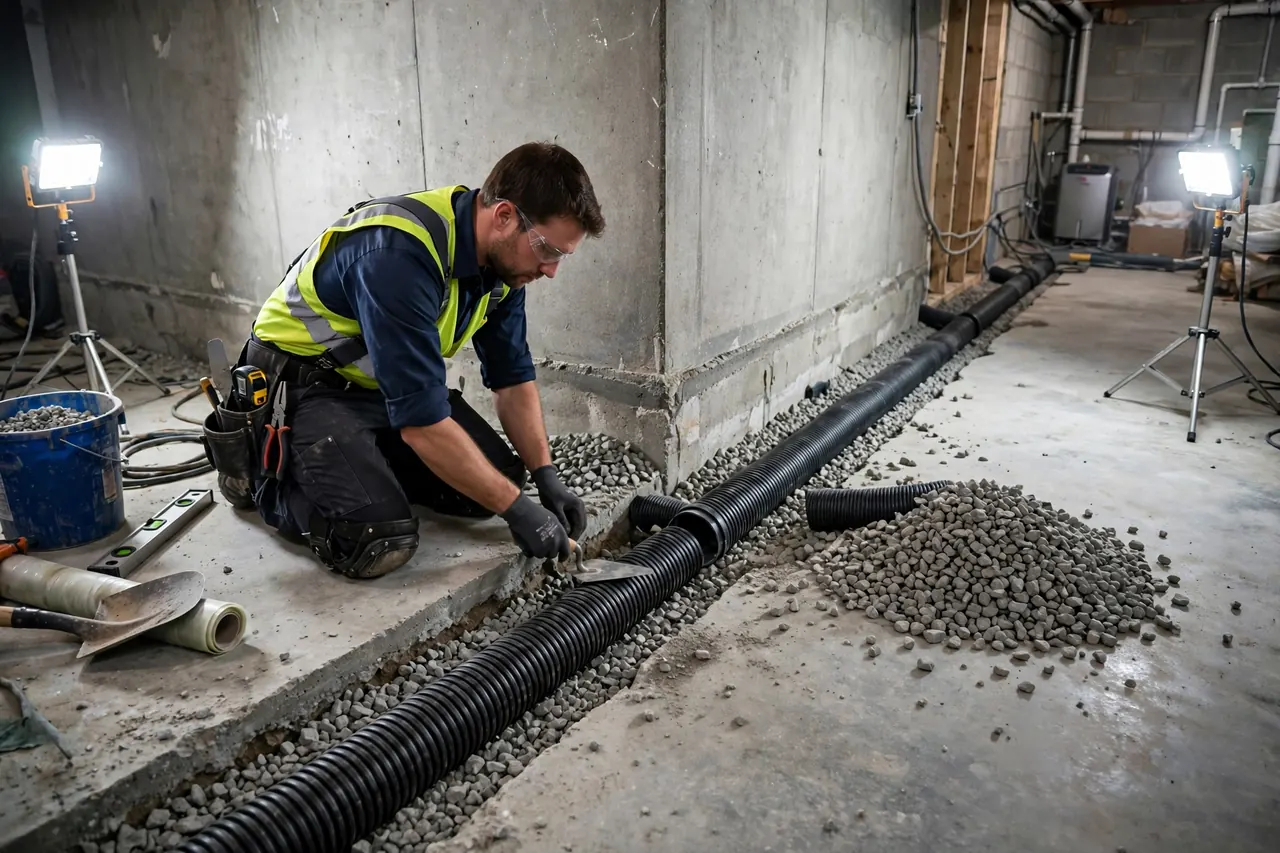
a perimeter drain installed inside the basement, no exterior excavation needed. The practical fix when tight lots rule out digging around the foundation.
02Sump pump installation in Campbell
reliable pumps with battery backup in properly sized basins. On dense lots with concentrated stormwater, the pump does heavy work.
03Foundation crack repair in Campbell
sealing cracks in older poured and block walls. We describe the repair plainly and refer structural questions, bowing, shifting, to a structural engineer. We never declare a foundation safe.
04Basement dehumidification in Campbell
for older basements that stay humid between leak events. Controls air moisture; does not stop water entry.
05Crawl space waterproofing in Campbell
drainage and vapor barriers for crawl spaces under older dense-lot homes.
06Gutter and downspout help in Campbell
rerouting downspouts out of narrow side yards and away from foundations, including your neighbor's discharge if it is landing on your side.
The Water Problems Campbell Homeowners Actually See
Leaks on the neighbor's side
Water consistently entering along the wall you share with the adjacent lot, even when your own yard looks fine. On narrow lots, your neighbor's roof runoff and grading become your problem: their downspouts, their slope, their water, your wall. This is the signature dense-lot leak, and it is why we always ask about the neighbors' grading and downspouts.
Seepage along the whole wall-floor joint
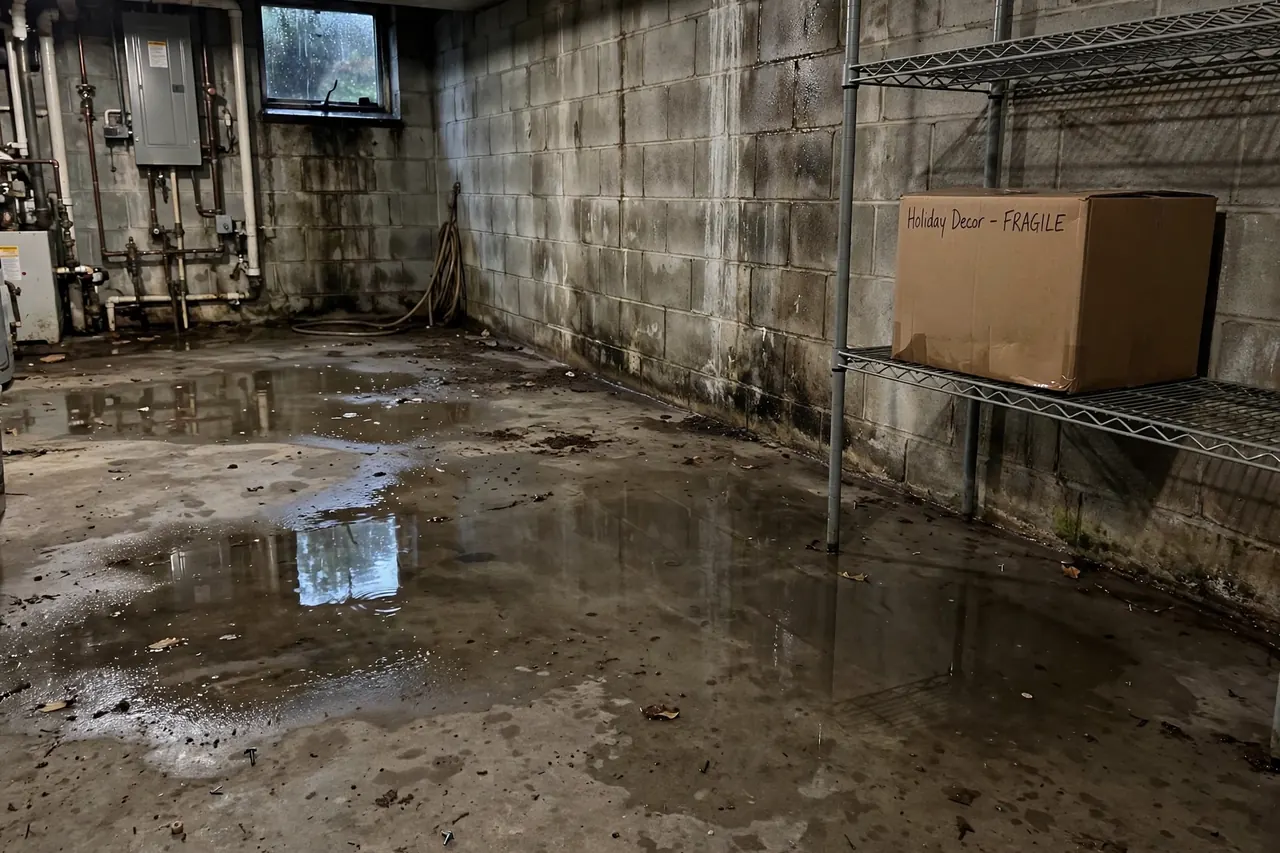
Concentrated stormwater on small lots raises pressure fast, and water comes up through the cove joint around the perimeter. Wall paint cannot stop it; interior drainage is built for exactly this.
Basements that flood in heavy downpours specifically
If your basement stays dry in steady rain but floods in cloudbursts, your problem is volume concentration, too much water, too fast, on too little ground. Dense-lot cloudburst flooding is a capacity problem, and the system needs capacity to match.
Aging pumps in old basins
Many Campbell homes have a sump setup installed decades ago, small basin, tired pump, no backup. In a cloudburst, that setup gets overwhelmed in minutes. Upgrading the basin and pump is often the highest-value fix on the street.
Musty older basements
Older dense-lot basements often hold dampness, musty smells, damp air, mold on stored items. General guidance: stop the water entry first, then dry and address humidity. We make no medical claims about mold; we talk about moisture control.
Why Dense Lots Multiply Water Problems
Every roof is a watershed. On a dense Campbell street, the roofs, driveways, and patios of several homes shed water onto a small patch of ground. One inch of rain on a single roof is hundreds of gallons, and on tight lots, those gallons land close together, saturate the same soil, and press on the same foundations. The math of density works against every basement on the street.
Your sump discharge is someone else's problem, and theirs may be yours. Where does your pump send its water? On a big lot, the answer barely matters. On a Campbell lot, a discharge line can end a few feet from a neighbor's foundation. Pumped water that soaks right back into the ground near a foundation just recycles through the system. Discharge needs to go somewhere it cannot come back from.
The old street patterns are baked in. These blocks were laid out when stormwater was an afterthought: shared driveways, flat grades between houses, downspouts ending at the property line. Generations of small changes, a new patio here, a regraded strip there, have made the water paths worse, not better. The fix has to work within those constraints, which is why interior drainage fits Campbell so well: it solves the problem from inside, where there is room to work.
What to Watch for This Season in Campbell
Summer is cloudburst season, the worst for dense lots, when huge volume hits small ground all at once. Make sure your pump is healthy before storm season, not after the first flood.
Fall: leaves block what little drainage these lots have. Clean shared gutters and the narrow side-yard strips before the fall rains.
Winter: ice dams on older roofs send meltwater down walls and into side-yard gaps. Watch for heavy icicles over the narrow strips between houses.
Spring: thaw on frozen, saturated small lots means water with nowhere to go. Check the basement early in the season and keep the pump ready.
How We Work
We look beyond your property line
Our inspection considers how water moves across the neighboring lots too, because in Campbell, that is often where your water comes from.
We favor what fits tight lots
Interior solutions that do not require excavation equipment in a four-foot side yard. We recommend what actually works for your lot, not a one-size system.
We put it in writing
Clear scope, honest limits. No "lifetime guarantees," no "permanent" promises.
What Happens After You Contact Us
Call (330) 555-0147 and tell us your pattern, which wall leaks, whether it tracks with heavy rain, what the neighboring lots look like. We schedule an on-site visit.
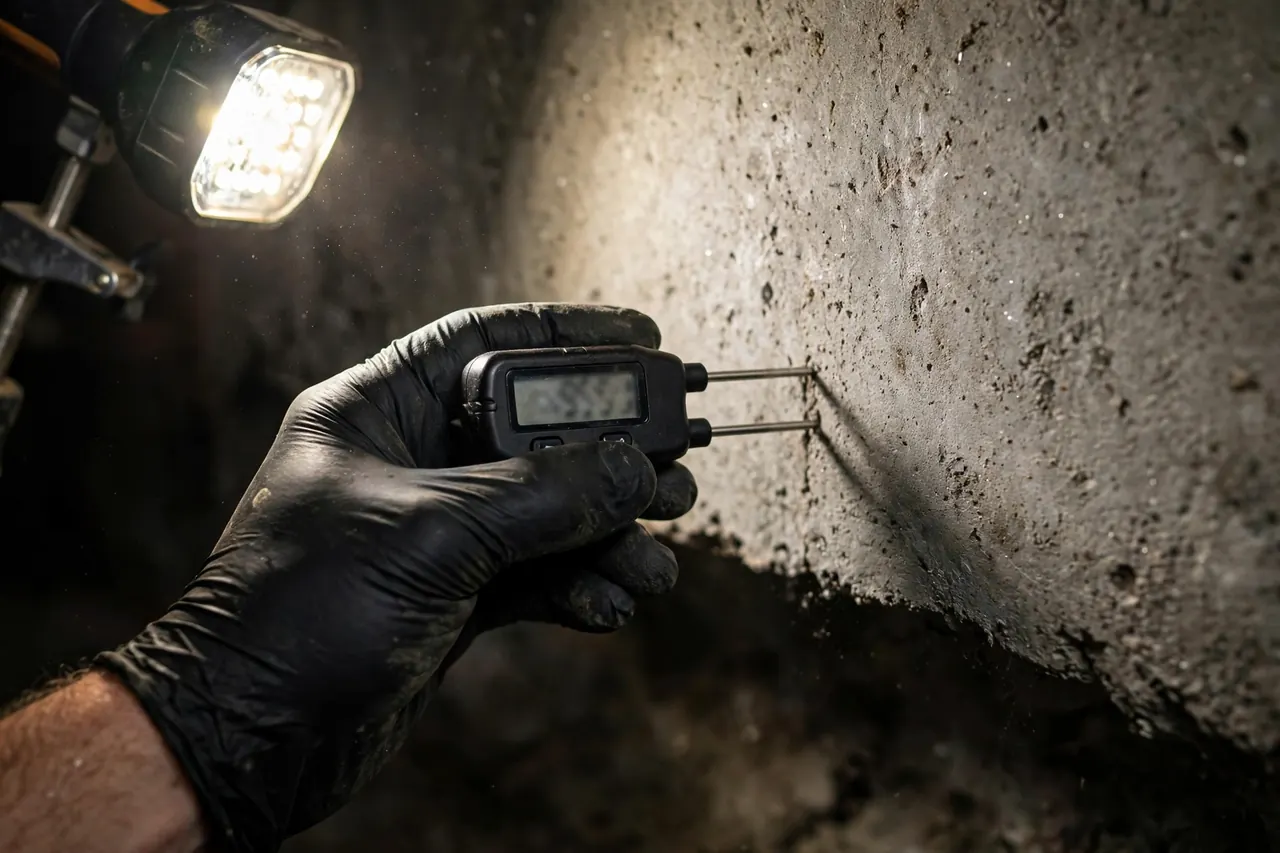
We inspect the basement, the existing drainage and pump, and the grading and downspouts on your lot and the adjacent ones. Then we explain your options in plain language, in writing. You decide without pressure.
Get Your Campbell Basement Fixed
Tight lots and older homes are a combination we know well, and interior systems are made for exactly this situation. Mahoning Basement Dry Co serves Campbell with honest inspections and plainly described work. Call (330) 555-0147 and tell us which wall is giving you trouble.
Basement waterproofing in Campbell - FAQs
Straight answers for Campbell homeowners.
Start with a conversation, many neighbors will fix a downspout or regrade a strip once they understand the problem. For what you cannot control next door, interior drainage protects your basement regardless of where the water comes from. We design for the water you get, not the water you wish you got.
On Campbell's tight lots, usually yes, not because exterior work is inferior in principle, but because there is often no practical way to excavate around the foundation. Interior drainage solves the same problem from inside, with far less disruption.
Volume concentration. Your lot and the surrounding roofs and pavement shed water faster than the ground and your old drainage can handle. Moderate rain stays manageable; cloudbursts exceed capacity. The fix is adding capacity, drainage and pumping sized for peaks.
Yes. Interior drainage is installed from inside with compact equipment, and we have worked in tight older basements throughout the east side. The visit confirms access and layout before any work is quoted.
Musty smell means chronic moisture, and chronic moisture slowly damages framing, finishes, and stored belongings, and feeds mold growth on organic materials. It is worth an inspection to find the moisture source before it becomes a bigger job.
As far from foundations as the lot allows, to a street drain, a dry well, or a downhill grade on your own property where it cannot flow back. Never onto a neighbor's lot, and never where it soaks in next to a foundation. Pumped water that returns to the soil beside the house just comes back through the basement.
You cannot control their lot, and that is exactly what interior drainage is for. It protects your basement from water no matter whose yard it comes from. We design for the water you actually get, not the water you wish you got.
Also serving nearby towns
Water in your Youngstown basement?
Call now, tell us what your basement is doing, and we’ll walk you through your options. No pressure.