
Crawl Space Waterproofing in Youngstown, OH
Crawl spaces get wet for a handful of reasons, often working together:
Signs you need this service
Most homeowners never go into their crawl space. These are the signs that show up in the parts of the house you do visit:
Musty smell upstairs
that gets worse in summer, the stack effect carrying crawl space air into your living space
Cold, damp-feeling floors
in winter, especially over the crawl space
Bouncy or sagging floors
, moisture softens floor joists and subflooring over time
Allergy-type symptoms
that ease when you leave the house (talk to your doctor about health questions)
Insulation falling down
under the floor, moisture destroys its fasteners and its effectiveness
Pest evidence
, termites, carpenter ants, and rodents all prefer damp wood and damp soil
High energy bills
with no other explanation, damp air costs more to heat and cool
Visible mold or standing water
if you do look inside, or a vapor barrier that is torn, bunched, or missing
If two or more of these sound familiar, the crawl space deserves an inspection, even if you would rather not go down there yourself.
What’s included
A complete crawl space job addresses water, air, and humidity together:
- Drainage , an interior drain around the crawl space perimeter that catches groundwater and routes it to a sump pump, same principle as basement interior drainage
- Sump pump , removes collected water from the crawl space (see sump pump installation)
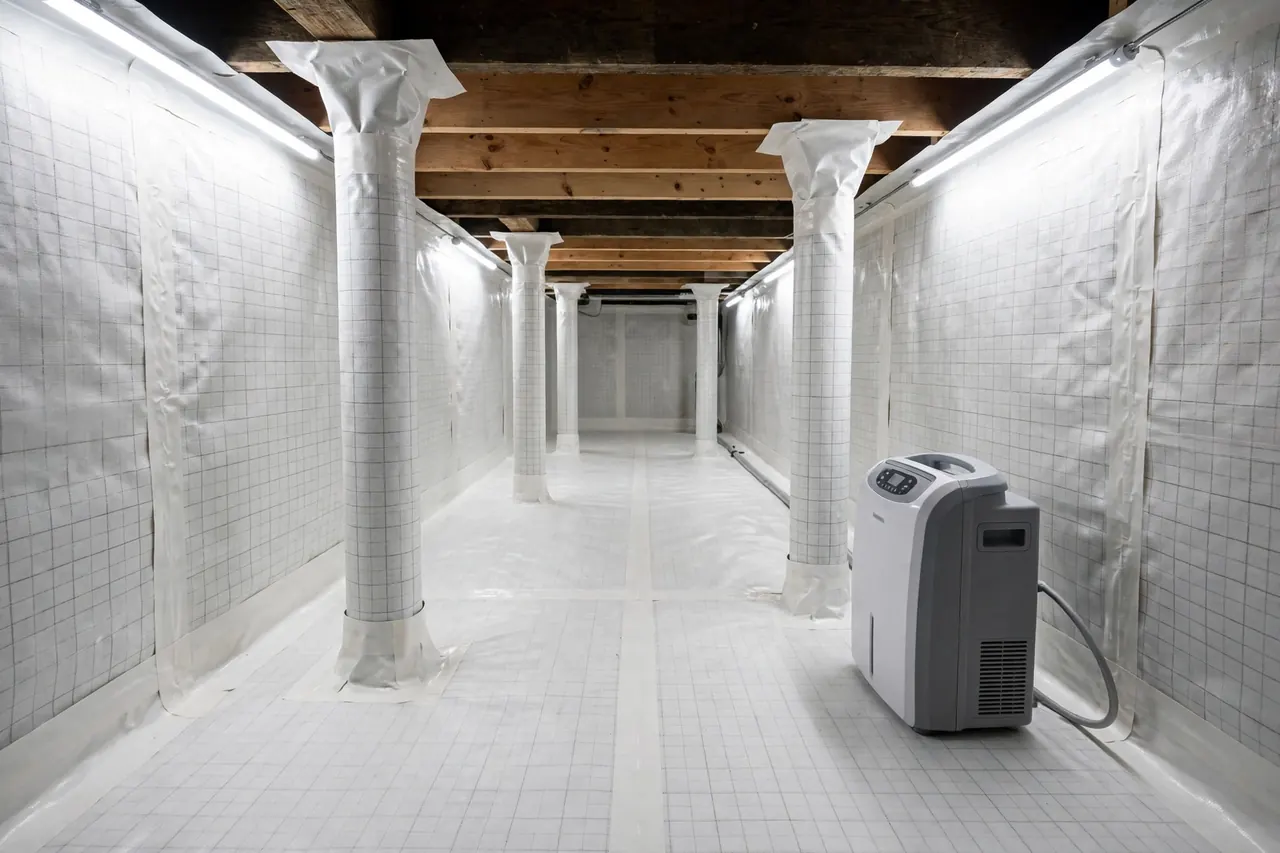
- Vapor barrier , heavy-duty liner sealed over the dirt floor (and often up the walls) that blocks ground moisture from entering the air
- Vent sealing , closing the old vents that were letting humid outside air pour in
- Dehumidification , a crawl-space-rated dehumidifier that holds humidity in the healthy range automatically
- Insulation adjustments , where needed, moving insulation from the floor to the walls so ducts and pipes stay in conditioned space
- Access door upgrade , a sealed, insulated access door replaces the loose-fitting original
Not every crawl space needs every item. A space with a good vapor barrier but no drainage needs drainage. A space with standing water needs the full approach.
How the work goes
Call (330) 555-0147 and tell us what you know
Musty smell? Sagging floors? Never been down there? All useful information.
Inspection
We go into the crawl space (yes, actually in) and check for standing water, mold on joists, vapor barrier condition, vent status, insulation, and plumbing leaks.
Honest findings
We show you photos of what we found and explain what matters and what does not. If the space just needs a new vapor barrier, we will say so.
Written scope
You approve the exact work, drainage, liner, dehumidifier, vent sealing, and the price before scheduling.
Installation
Debris and old failed materials come out first. Then drainage, liner, sealing, and equipment go in. Most jobs take two to four days.
Verification
Humidity readings are taken, the pump and dehumidifier are tested, and you see the finished space (in photos, if you prefer not to crawl in).
Timeline Expectations
- Inspection: one visit, we actually enter the crawl space
- Vapor barrier only: usually one to two days
- Drainage + sump: two to three days
- Full encapsulation: typically three to five days depending on size, height, and condition
- If mold remediation is needed first: add the remediation time before encapsulation begins, liner over mold just hides it
Low-clearance crawl spaces take longer. Everything is harder, and slower, in a two-foot-tall space.
Why Is My Crawl Space Damp?
Crawl spaces get wet for a handful of reasons, often working together:
- Groundwater seepage. In areas with a high water table, water pushes up through dirt floors after rain, the same hydrostatic pressure that floods basements.
- Surface water entry. Poor grading, short downspouts, or missing gutters send rainwater straight into crawl space vents or access doors.
- Open vents. Traditional vented crawl spaces were designed to "breathe", but in humid Ohio summers, vents let warm moist air in, where it condenses on cool ductwork, pipes, and joists.
- Plumbing leaks. A slow drip from a supply line or drain can soak a crawl space for months before anyone notices.
- No vapor barrier. Bare dirt floors release ground moisture into the air continuously. Without a barrier, the crawl space is permanently humid.
The result is the same regardless of cause: humidity levels of 70–90%, condensation on every cool surface, and ideal conditions for mold and wood rot.
The Part Most People Miss: Your Crawl Space Air Is Your House Air
Here is the fact that changes how people think about crawl spaces. Warm air rises. As heated air escapes through your attic in winter (or rises naturally in summer), replacement air is pulled in from below, from your crawl space. Building scientists call this the stack effect.
That means the musty, humid air in your crawl space is being drawn up through your floors, into your living rooms and bedrooms, all day long. A damp crawl space does not just threaten your joists, it affects the air your family breathes throughout the house. Fixing crawl space moisture is a whole-house improvement, not just a basement project.
Vapor Barrier vs. Full Encapsulation: What's the Difference?
Vapor barrier (the basics)
A thick polyethylene liner, typically 12 to 20 mil, is laid over the dirt floor and sealed at the seams. It blocks ground moisture from evaporating into the crawl space air. This is the minimum every dirt-floor crawl space should have, and many older Youngstown homes have either a thin torn sheet or nothing at all.
Best for: Crawl spaces with moderate humidity and no standing water.
Full encapsulation (the complete system)
Encapsulation takes the vapor barrier further: the liner runs up the foundation walls and is sealed, vents are closed, and a dehumidifier controls the air. The crawl space becomes a sealed, dry, semi-conditioned part of the house instead of an outdoor space under your floor.
Best for: Crawl spaces with standing water, persistent high humidity, mold on joists, or musty smells reaching the living space.
In plain terms: a vapor barrier blocks moisture from the ground. Encapsulation blocks moisture from the ground and the outside air, then actively controls what remains. If your crawl space has real water problems, not just mild dampness, encapsulation is the answer that actually holds.
Is Crawl Space Encapsulation Worth It?
For the right situation, yes, and here is the honest math:
It is worth it when:
- The crawl space has standing water or chronic high humidity
- There is mold on joists or subflooring
- Musty smells reach the living space
- Floors feel cold, damp, or bouncy (moisture weakens wood over time)
- You have already tried a basic vapor barrier and it was not enough
It may not be worth it when:
- The crawl space is genuinely dry year-round with a basic barrier in place
- The real problem is a plumbing leak, fix the leak first
- Surface water is the cause and grading/gutter fixes would solve it for far less
Encapsulation is a significant investment, commonly $5,000–$15,000 depending on size and condition. We will never recommend it where a simpler fix would do. The inspection decides.
Benefits of a Dry Crawl Space
- Healthier indoor air. Less moisture rising into the living space means less musty air throughout the house.
- Mold prevention. Mold needs moisture to grow. A sealed, dehumidified crawl space starves it.
- Protected structure. Floor joists, subflooring, and support beams last decades longer in dry conditions.
- Lower energy bills. Dry air is easier to heat and cool than humid air, and sealed vents stop conditioned air from escaping downward.
- Fewer pests. Damp crawl spaces attract termites, carpenter ants, rodents, and other moisture-loving pests.
- Usable storage. A clean, dry, lined crawl space can safely store items that would have rotted before.
Every Crawl Space Option, With Honest Tradeoffs
Interior perimeter drainage
A drain channel around the inside of the crawl space foundation walls, routed to a sump pump, the same principle as basement interior drainage, scaled to the space.
Pros: handles groundwater and standing water at the source. Cons: requires enough crawl space height to work in; adds cost.
Vapor barrier (liner)
A heavy polyethylene sheet, 12 to 20 mil, sealed over the dirt floor and up the walls.
Pros: the single most cost-effective moisture step; every dirt-floor crawl space should have one. Cons: does nothing about standing water or humid outside air; thin liners tear.
Full encapsulation
Liner sealed up the walls, vents closed, seams taped, dehumidifier installed, the crawl space becomes sealed, conditioned space.
Pros: the complete answer for wet, moldy, or smelly crawl spaces; protects structure and improves air quality. Cons: the most expensive option; overkill for a genuinely dry crawl space.
Vent sealing (closing the vents)
Part of encapsulation. The old vented design is closed off because open vents import humid summer air.
Pros: stops the summer condensation cycle. Cons: must be paired with a vapor barrier and usually a dehumidifier, sealing vents without controlling ground moisture makes things worse, not better.
Crawl space dehumidifier
A unit rated for crawl space conditions holds humidity in the healthy range automatically, draining to the sump or outside.
Pros: active, automatic humidity control. Cons: needs power and drainage; a unit alone cannot fix standing water.
Sump pump
Removes water that drainage collects. Same equipment as basement systems, sized to the space.
Pros: handles real water intrusion, not just humidity. Cons: needs power; consider battery backup in outage-prone areas.
What about just running a fan?
Fans move air but do not remove moisture, and in a vented crawl space, a fan can pull in more humid outside air. Ventilation is not dehumidification. Skip the fan; fix the moisture.
Why Youngstown Crawl Spaces Struggle
Clay soil
The Mahoning Valley's heavy clay holds water against foundation walls and under dirt floors. After rain, that water has nowhere to go but up into the crawl space.
Humid summers
Ohio summers bring long stretches of humid air. Open crawl space vents, standard in older construction, invite that humid air in, where it condenses on cool surfaces all summer.
High water table areas
Near the Mahoning River and in low-lying neighborhoods, groundwater sits close to the surface. Dirt-floor crawl spaces in these areas can take on water with every heavy rain.
Older construction
Many area homes were built with vented dirt-floor crawl spaces and thin (or missing) vapor barriers, a design that modern building science has moved away from for good reason.
If your home is in Hubbard, Struthers, or Girard, areas with older homes and high-water-table pockets, a crawl space check is especially worthwhile.
This service is part of our Youngstown basement waterproofing services — the overview ties it all together. See where we work in the Mahoning Valley for the full coverage list.
Why Choose Mahoning Basement Dry Co
We actually go in
A real inspection means getting into the crawl space with a light and a camera, not guessing from the access door.
Photos of everything
You see what we see, so our recommendations make sense.
Right-sized solutions
Vapor barrier where a barrier is enough; full encapsulation where it is not. We do not sell the big job by default.
Waterproofing is all we do
Crawl spaces, drainage, pumps, and moisture, our entire focus.
Written scope, clear price
Approved by you before anything is scheduled.
What affects the cost
These are typical industry estimates, not a quote from us:
- Vapor barrier replacement (liner only): commonly $1,500–$4,000 depending on size
- Interior crawl space drainage with sump pump: commonly $3,000–$8,000
- Full encapsulation (drainage + liner + sealing + dehumidifier): commonly $5,000–$15,000
- Crawl space dehumidifier (installed): commonly $1,500–$3,000
What affects the price: crawl space size and height (low clearance costs more in labor), amount of standing water, condition of joists, and whether mold remediation is needed first (see mold remediation).
When to Call a Pro
Call when:
- There is standing water in the crawl space, ever
- You see or smell mold on joists or subflooring
- Floors are sagging, bouncy, or cold and damp
- The vapor barrier is missing, torn, or decades old
- Musty smells reach the living space
- You are buying a home with a crawl space you have not inspected
You can reasonably DIY:
- Laying a basic vapor barrier in a dry, accessible crawl space with no water or mold issues
- Sealing an access door with weatherstripping
Do not DIY:
- Drainage and sump installation in a wet crawl space
- Mold remediation beyond a tiny surface spot
- Anything involving the structure, sagging joists, rotted beams, or compromised supports need professional assessment
Call (330) 555-0147. We will go in, photograph everything, and tell you what the space actually needs, including when the answer is "less than you feared."
Serving Youngstown and 10 nearby towns
Common questions
Straight answers about crawl space waterproofing in Youngstown.
Usually a combination of groundwater pushing up through the dirt floor, humid outside air entering through vents, and missing or failed vapor barriers. Poor grading and short downspouts make it worse. An inspection identifies which causes apply to yours.
When the space has standing water, chronic humidity, mold, or smells reaching upstairs, yes. When it is genuinely dry with a basic barrier, probably not. We recommend based on what the inspection finds, not a one-size-fits-all answer.
A vapor barrier is a liner over the dirt floor that blocks ground moisture. Encapsulation is the full system: liner up the walls and sealed, vents closed, and a dehumidifier controlling the air. Encapsulation handles water from both the ground and the outside air.
Encapsulation removes the moisture mold needs, which is the key step. Existing mold should be remediated first, then the dry environment keeps it from returning. See our mold remediation page.
Most jobs take two to four days depending on size, water conditions, and whether mold remediation is needed first.
A basic liner over the floor is a reasonable DIY project in a dry crawl space. But if there is standing water, mold, or structural concerns, the drainage and remediation work underneath needs a professional, a liner over an active water problem just hides it.
For most Ohio homes, closed, as part of a sealed, encapsulated system with a vapor barrier and dehumidification. The old "vents let it breathe" logic backfires in humid summers: open vents import warm moist air that condenses on cool ducts and joists. But vents should only be closed as part of a complete system, closing them without a vapor barrier and humidity control traps ground moisture inside.
The common professional range is 12 to 20 mil polyethylene, sealed at seams and up the walls. Thinner sheeting (6 mil, the hardware-store default) tears easily and rarely stays sealed. Thickness matters less than proper sealing, a well-sealed 12-mil liner outperforms a poorly installed 20-mil one.
Yes, that is one of the benefits. A clean, dry, sealed crawl space is fine for storage in sealed plastic bins. Avoid cardboard boxes directly on the liner long-term, and keep items off the ground where possible for airflow.
It can. Sealed vents stop conditioned air from escaping downward, dry air costs less to heat and cool, and ducts in a sealed crawl space lose less energy. The savings are real but gradual, treat energy savings as a bonus, not the reason to encapsulate. The reasons are moisture, mold prevention, and structural protection.
Related waterproofing services
Get Your Crawl Space Inspected
The crawl space you never visit could be affecting your whole house. Call Mahoning Basement Dry Co, we will inspect it properly, show you photos of what we find, and recommend only what it actually needs. No scare tactics, no overselling.
Call today.