
Basement Waterproofing in Canfield, OH
Canfield homes sit on bigger lots than most of the Mahoning Valley, and that cuts both ways. More land means water has farther to travel, and if your grading sends it toward the house instead of away, a whole acre of rain ends up pressing against your foundation.
Meta title: Basement Waterproofing in Canfield, OH | Drainage Meta description: Wet basement in Canfield, OH? Big lots and grading problems send water to foundations here. We inspect grading, gutters, and drainage. Call (330) 555-0147 today.
Canfield homes sit on bigger lots than most of the Mahoning Valley, and that cuts both ways. More land means water has farther to travel, and if your grading sends it toward the house instead of away, a whole acre of rain ends up pressing against your foundation.
Mahoning Basement Dry Co provides basement waterproofing in Canfield for both ends of Canfield's housing mix: newer homes where grading and downspouts were never quite right, and older farmhouses whose foundations have seen a century of Ohio weather. Call (330) 555-0147 to get an honest look at what your water is doing.
Start with basement waterproofing in the Youngstown area if you are comparing options.
Why Canfield Basements Get Wet
Big lots, big grading problems
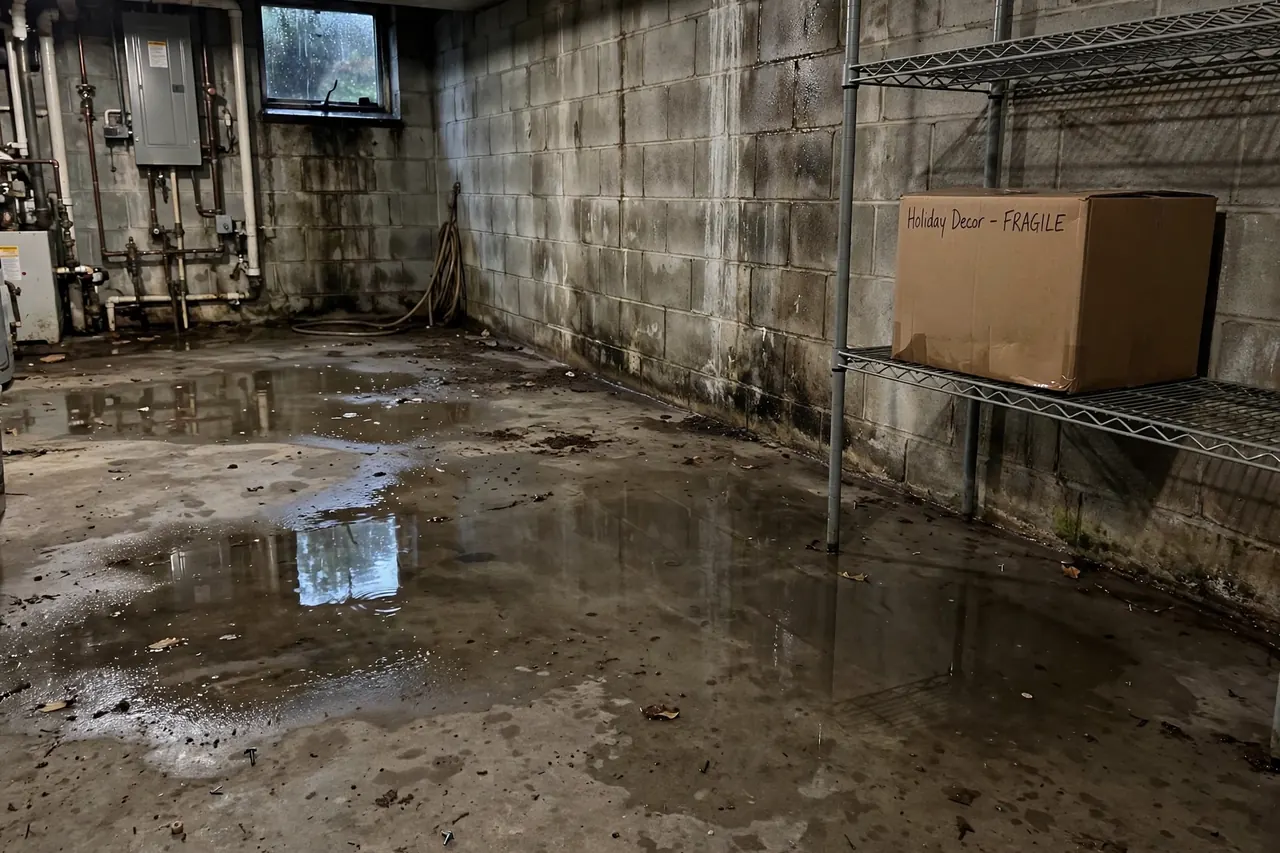
On a quarter-acre or more, grading is everything. A lot that looks flat can still funnel water toward the house from a surprising distance. Low spots between properties, settled backfill around the foundation, and driveways that tilt the wrong way all collect water and deliver it to your walls. The larger the lot, the more water your foundation has to deal with when grading is off.
Newer homes with never-right grading
In newer subdivisions, builders rough-grade the lot and move on. The soil around the foundation settles in the first few years, and that settlement often creates a moat effect, a dip right against the house where water pools after every rain. A home that is only ten or fifteen years old can already have grading that works against it.
Older farmhouses with old foundations
Canfield's older farmhouses may have stone or early block foundations that were never meant to hold back modern stormwater volumes. Mortar weathers, stones shift slightly, and water finds paths that did not exist decades ago. These homes need careful, honest assessment, we describe what we see and defer any structural judgment to a structural engineer.
Downspouts that end too close
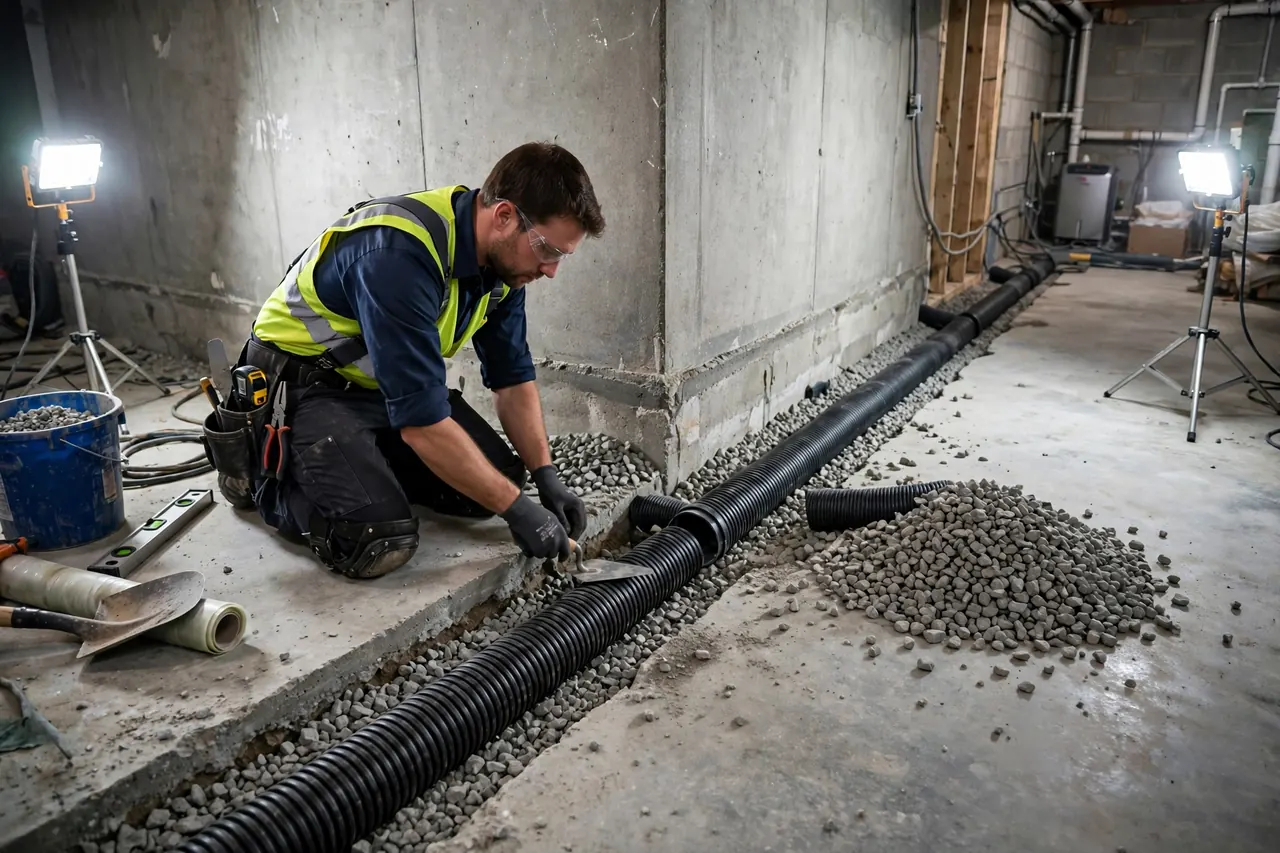
On a large lot, there is no excuse for downspouts dumping at the foundation, but it happens constantly. A roof collects an enormous amount of water in a storm, and four downspouts ending at the corners of the house can saturate the soil around the foundation in a single afternoon. Extensions are a cheap fix with an outsized effect here.
Waterproofing Services Available in Canfield
Gutter and downspout help in Canfield
extending downspouts far from the foundation and fixing grading issues. On Canfield lots, this is often the highest-value first step.
02Interior drainage systems in Canfield
a perimeter channel inside the basement that catches water at the floor joint and walls and sends it to a sump pump, for homes where exterior fixes are not enough.
03Sump pump installation in Canfield
properly sized pumps with battery backup, so the system keeps working through the storms that cause outages.
04Foundation crack repair in Canfield
sealing cracks in poured, block, or older stone foundations. We explain the repair plainly and never declare a foundation safe, structural questions go to a structural engineer.
05Crawl space waterproofing in Canfield
drainage and vapor barriers for crawl spaces, common in older farmhouse additions.
06Basement dehumidification in Canfield
humidity control for basements that stay damp between storms. Manages air moisture; does not stop water entry.
The Water Problems Canfield Homeowners Actually See
Water after rain, but only on one side
When one wall leaks and the others stay dry, grading is usually the culprit, a low spot, a downspout, or a slope on that side of the lot. This is the most fixable pattern in Canfield, and it is worth diagnosing before assuming you need a full system.
A wet ring around the whole foundation
Newer homes with settled backfill often show seepage all the way around the cove joint. The soil against the house has sunk, creating a channel that catches water from the entire lot. Regrading plus interior drainage is the honest answer here.
Farmhouse walls that weep through the mortar
Older stone and block foundations let water seep through joints rather than cracks. It shows up as damp patches, drips, and eventually white mineral crust. These walls need patient assessment, what looks like a small seep can be a wide area of worn mortar.
Sump pump running every few minutes in spring
On larger lots with high spring water tables, an undersized or aging pump can run constantly and still fall behind. If your pump never gets a break during wet weeks, the system needs upsizing or backup, not another season of hoping.
Yard ponding that reaches the house
Standing water in the yard that creeps toward the foundation during heavy rain is a grading failure, full stop. The yard is telling you where the water wants to go. We can talk through grading fixes and where drainage belongs.
The Hidden Water Paths on Big Lots
Swales between lots are supposed to carry water away, but they silt up, get filled in by landscaping, or were never graded correctly to begin with. A dead swale becomes a long pond aimed at your foundation every time it rains hard. Walk your lot lines after a storm and you will see exactly where the water is going.
Long driveways and outbuildings quietly change the watershed. A long driveway sheds its water somewhere, often toward the house at the low end. Barns, sheds, and additions each add roof water to a lot that was graded before they existed. Every structure added after the original grading is a new water source the lot was never designed for.
Wooded edges work against you slowly. Tree roots redirect subsurface water, fallen leaves dam up swales, and shaded ground near tree lines stays saturated longer. On acreage, the far corners of your lot are part of your basement's water story, even the parts you never walk to.
What to Watch for This Season in Canfield
Spring: walk the lot after the thaw and look for new low spots and ponding. Grading shifts a little every year, and spring shows you where.
Summer: heavy storms test swales and long downspout runs. Watch where water actually goes during a downpour, not where it is supposed to go.
Fall: leaves are the enemy of every swale and drain on a big lot. Clear them before the fall rains arrive.
Winter: frozen ground sheds water instead of absorbing it. Make sure downspout outlets stay open and keep discharging well away from the house.
How We Work
We walk the whole property
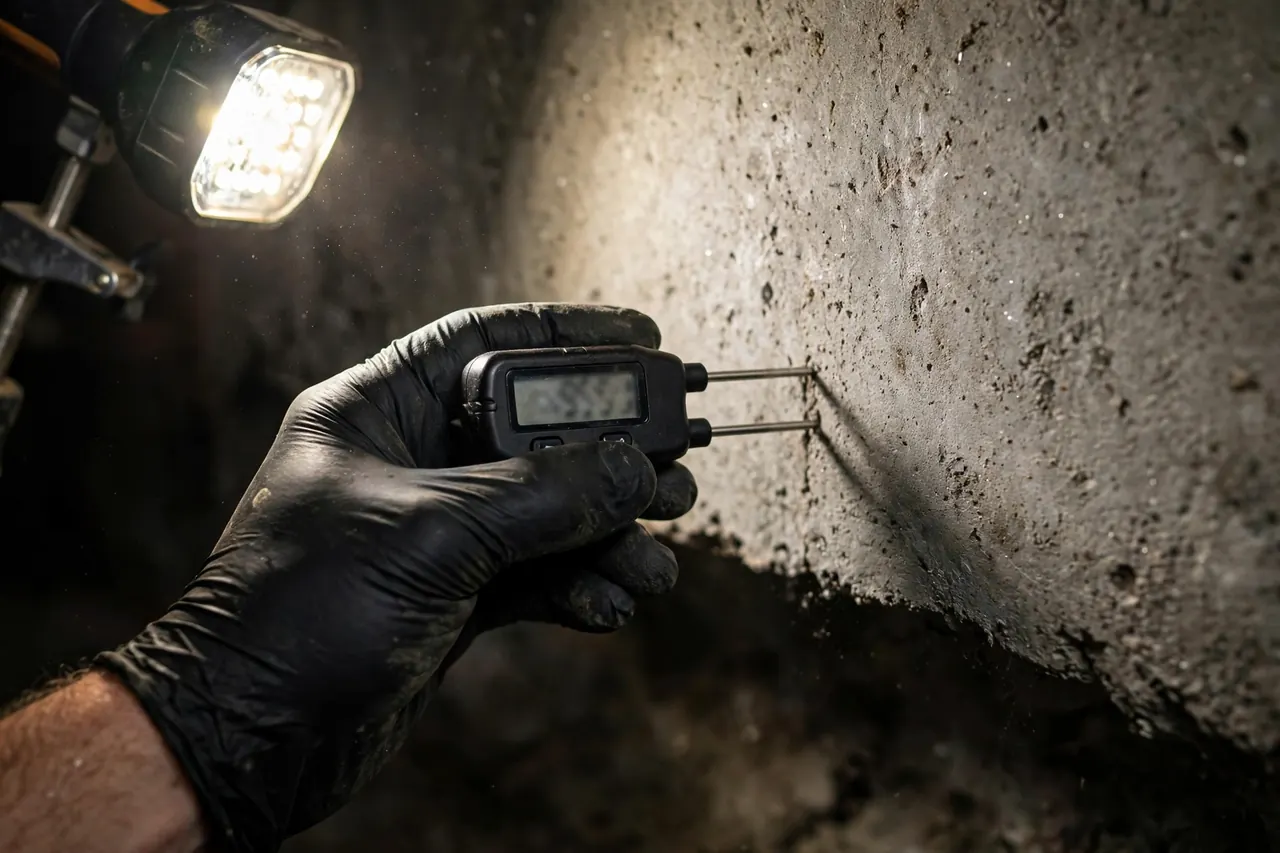
Basement, foundation walls, yard grading, downspouts, low spots, the water's path starts outside, so we start there too.
We tell you the cheapest fix that works
If regrading and downspout extensions solve it, that is what we recommend. We do not sell interior systems to homes that need dirt work.
We put it in writing
Any work is described clearly, what we do, what it addresses, and what it does not promise. No "lifetime guarantees," no "permanent" claims. Honest descriptions only.
What Happens After You Contact Us
Call (330) 555-0147 and tell us about your lot and your leaks, which side of the house, when it happens, how old the home is. We schedule a visit and walk the property with you.
You get a plain-language explanation of where your water is coming from and your options, cheapest effective fix first, all in writing. You decide from there. No pressure, no same-day pitch.
Get Your Canfield Property Checked
Water follows the lay of your land, and on a big lot, that path is worth understanding before you spend a dollar on fixes. Mahoning Basement Dry Co serves Canfield with property-wide inspections and honest recommendations. Call (330) 555-0147 and walk us through what you are seeing.
Basement waterproofing in Canfield - FAQs
Straight answers for Canfield homeowners.
Settled backfill is the usual answer. The soil placed around your foundation during construction compacts in the first decade, often forming a low ring against the house. Add downspouts that end at the foundation, and a young home can leak like an old one.
As far as practical, on Canfield lots, there is room to run them well out into the yard. The goal is getting roof water past the backfilled soil near the foundation and onto ground that slopes away. Even ten feet makes a real difference.
Stone foundations need careful handling. We assess how water is entering, through mortar joints, at the floor line, or both, and recommend accordingly. What we will not do is guess about structural stability; anything involving wall movement or bulging goes to a structural engineer first.
Sometimes, yes, especially when leaks are one-sided and clearly tied to a low spot or downspout. But if water is rising through the floor from below, grading cannot stop it. The inspection tells us which situation you are in.
On a large lot where the pump does heavy lifting through spring storms, backup power is cheap insurance. Outages and heavy rain arrive together often enough that it is worth discussing on every Canfield visit.
Watch it during a hard rain. Water should move steadily along it and away from the house. If it ponds, spills toward the foundation, or looks more like a leaf-filled ditch than a channel, it needs attention, cleaning, regrading, or both.
Yes. Roots can clog exterior drain lines and redirect subsurface water toward the foundation. If large trees stand close to the house, mention it on the visit, it changes what we look for and where we look for it.
Also serving nearby towns
Water in your Youngstown basement?
Call now, tell us what your basement is doing, and we’ll walk you through your options. No pressure.