
Basement Waterproofing in Poland, OH
Poland is a village of contrasts: historic homes near the center that have stood for a century, and newer subdivisions on the edges, often on sloped, varied lots that the flatter suburbs do not have. Water behaves differently on a slope. It runs downhill, picks up speed, and arrives at the lowest foundation on the street with force. Whether your home is historic or nearly new, the lot it sits on shapes its basement problems.
Meta title: Basement Waterproofing in Poland, OH | Sloped Lots Meta description: Wet basement in Poland, OH? Sloped lots and a mix of historic and newer homes create tricky water paths. Get an honest inspection. Call (330) 555-0147.
Poland is a village of contrasts: historic homes near the center that have stood for a century, and newer subdivisions on the edges, often on sloped, varied lots that the flatter suburbs do not have. Water behaves differently on a slope. It runs downhill, picks up speed, and arrives at the lowest foundation on the street with force. Whether your home is historic or nearly new, the lot it sits on shapes its basement problems.
Mahoning Basement Dry Co provides basement waterproofing in Poland for both sides of the village: careful work on historic foundations, and grading-and-drainage fixes for newer homes on slopes. Call (330) 555-0147 for an inspection.
For the complete overview, see our main waterproofing page.
Why Poland Basements Get Wet
Sloped lots send water downhill
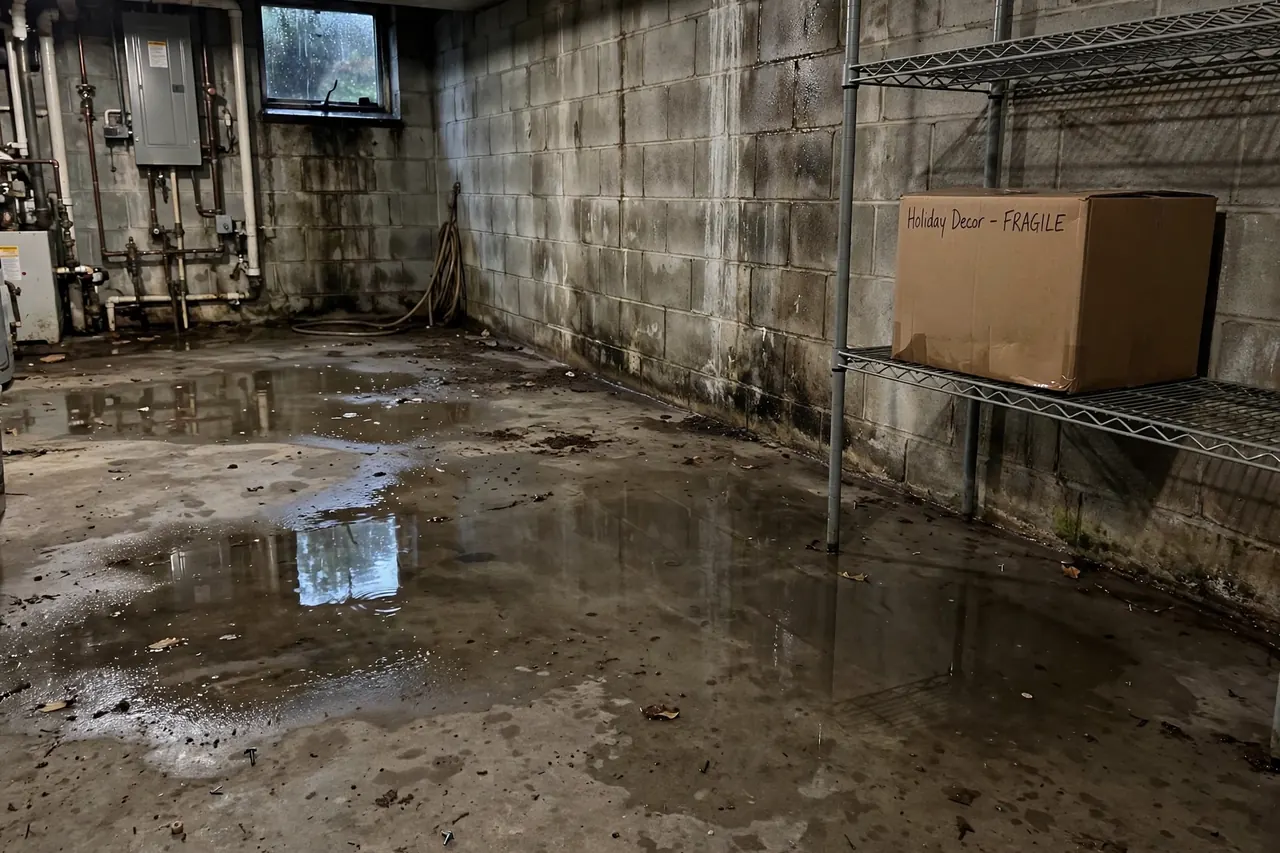
Poland's varied terrain means many homes sit below neighboring properties or at the bottom of a lot's natural slope. Uphill runoff, from your own yard, the street, or the neighbor above, flows straight to the lowest foundation. A home can have fine grading on its own lot and still collect everyone else's water.
Walkout basements have a vulnerable side
Homes built into slopes often have walkout or daylight basements, where one side of the basement is fully exposed. That exposed wall and its door or window openings face direct runoff. Water pooling at a walkout door, or seeping around the exposed wall's base, is a classic sloped-lot problem.
Historic homes, historic foundations
Poland's older homes near the village center may have stone, early block, or poured foundations that have weathered a century of Ohio seasons. Mortar wears, stones settle microscopically, and water finds paths through joints that did not leak a generation ago. These homes need patient, honest assessment, and we defer structural questions to a structural engineer, always.
Newer subdivisions, settling grades
On the village's newer streets, the story is familiar: backfill around the foundation settles in the first decade, creating a low ring that catches uphill and roof water. A fifteen-year-old home on a slope can leak like a much older one.
Freeze-thaw works the slopes
Winter ice expands saturated soil against foundation walls; on a slope, that saturated soil is also creeping downhill under its own weight. Spring melt then runs down the slope and into every crack winter opened. Poland's terrain amplifies the standard Ohio freeze-thaw cycle.
Waterproofing Services Available in Poland
Interior drainage systems in Poland
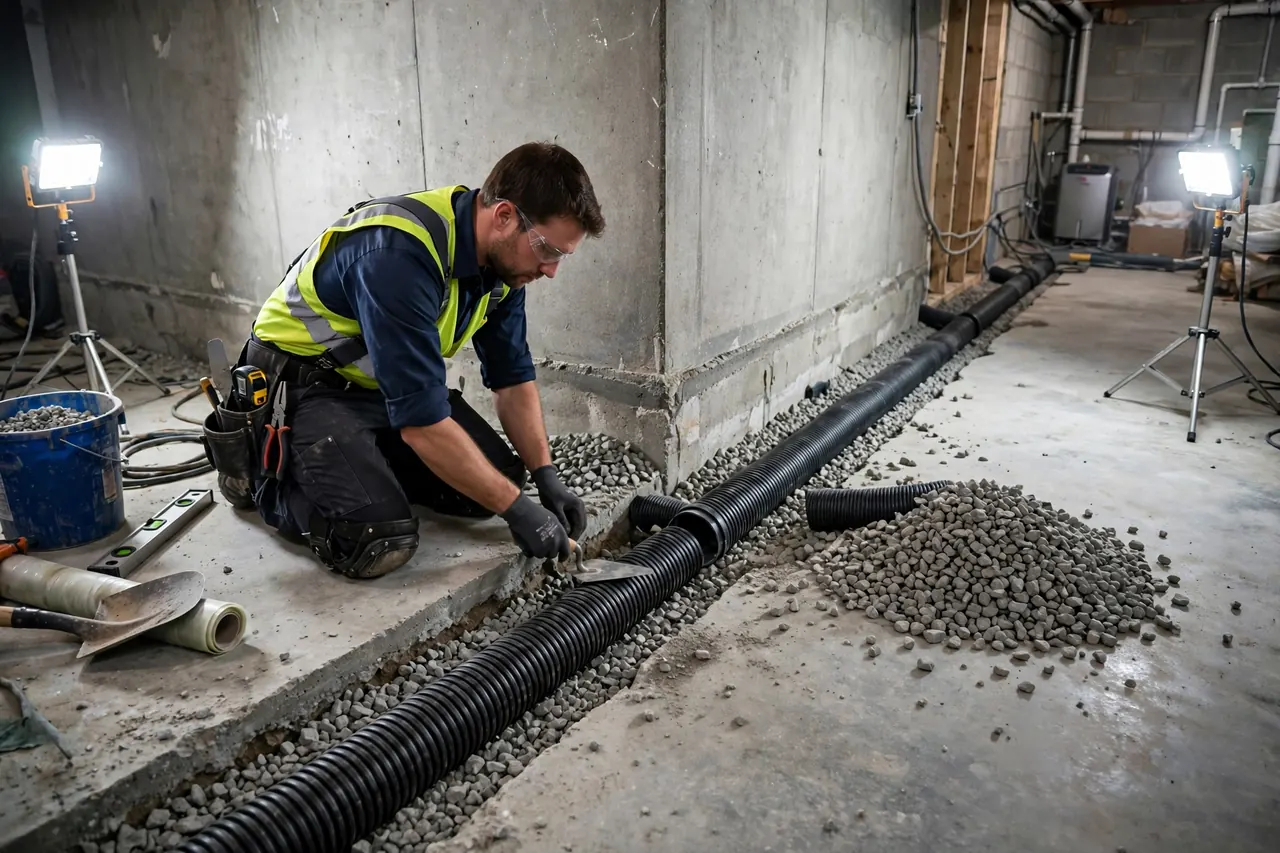
a perimeter drain that catches water at the floor line, from uphill seepage, wall weeps, or rising groundwater, and routes it to a sump pump.
02Sump pump installation in Poland
properly sized pumps with battery backup, for homes where slope-driven water arrives in volume.
03Foundation crack repair in Poland
sealing cracks in historic stone, older block, and newer poured walls. We describe the repair plainly and never declare a foundation safe, structural questions belong to a structural engineer.
04Gutter and downspout help in Poland
managing roof runoff on slopes so it does not join the uphill water already heading for the foundation.
05Basement dehumidification in Poland
humidity control for basements that stay damp between events. Manages air moisture; does not stop water entry.
06Crawl space waterproofing in Poland
drainage and vapor barriers for crawl spaces, including those under sloped-lot additions.
The Water Problems Poland Homeowners Actually See
The uphill wall always leaks first
When one wall, the one facing uphill, takes on water while the others stay dry, slope runoff is the driver. This pattern is highly diagnosable, and the fix usually combines exterior water management with interior drainage as backup.
Water at the walkout door
Pooling or seepage at a walkout basement door after rain means the grade outside the door is not carrying water away. Walkout entries need proper drainage at the door, a detail that gets missed in original construction more often than you would think.
Historic walls that weep through joints
Older stone and block foundations let water seep through mortar joints across a wall section, damp patches, drips, white efflorescence. It is a slow pattern, but it spreads over seasons if the water keeps coming.
Newer homes leaking at the foundation ring
Dampness all around the cove joint in a newer subdivision home points to settled backfill forming a water-catching ring. Regrading plus interior drainage is the honest fix.
Spring leaks after winter on the slope
Freeze-thaw opens cracks; spring melt runs downhill into them. If your leaks follow winter every year, the slope is delivering meltwater to winter-damaged walls, address both the water path and the wall.
How Slope Water Finds Your Basement
On a slope, water does not just run off, it also moves underground. Rain soaks into the uphill ground and travels downhill through the soil, reaching your foundation's uphill wall as both surface runoff and subsurface flow. Even with decent surface grading, water moving through the soil can press against the uphill side for days after a storm. That is why the uphill wall is almost always the first to leak in Poland.
Then there is the cut-and-fill problem. Many sloped lots were leveled with fill when the home was built, and fill settles. A newer Poland home on a slope can develop a low ring around the foundation as that fill compacts, catching uphill water and roof runoff right at the walls. The house looks new; the grading underneath is already failing.
Walkouts concentrate the risk at one point. A walkout basement door sits at the lowest point of the grade, exactly where slope water wants to go. Without a proper drain at the door and swales steering water around the opening, every heavy rain sends water straight to the threshold. It is a construction detail, and on slopes it matters more than almost anything else.
What to Watch for This Season in Poland
Spring: meltwater runs downhill fast. Watch the uphill wall and the walkout door through the thaw, slope water arrives in volume.
Summer: cloudbursts turn slopes into streams. Keep swales and door drains clear of debris so water has somewhere to go besides your basement.
Fall: leaves clog the exact drains that protect walkouts and low spots. Clean them before the fall rains, not after the first backup.
Winter: ice dams up the paths slopes depend on. Do not let downspout outlets freeze shut, and watch for ice building up at the walkout door.
How We Work
We read the slope
Our inspection starts with how water moves across your lot, uphill sources, the walkout side, low points, because in Poland, the terrain is the diagnosis.
We match the fix to the home's age
Historic foundations get careful, conservative assessment; newer homes get grading and drainage fixes. Different houses, different answers.
We put it in writing
Clear scope, honest limits. No "lifetime guarantees," no "permanent" promises.
What Happens After You Contact Us
Call (330) 555-0147 and tell us about your home and lot, its age, the slope, where water shows up. We schedule an on-site visit.
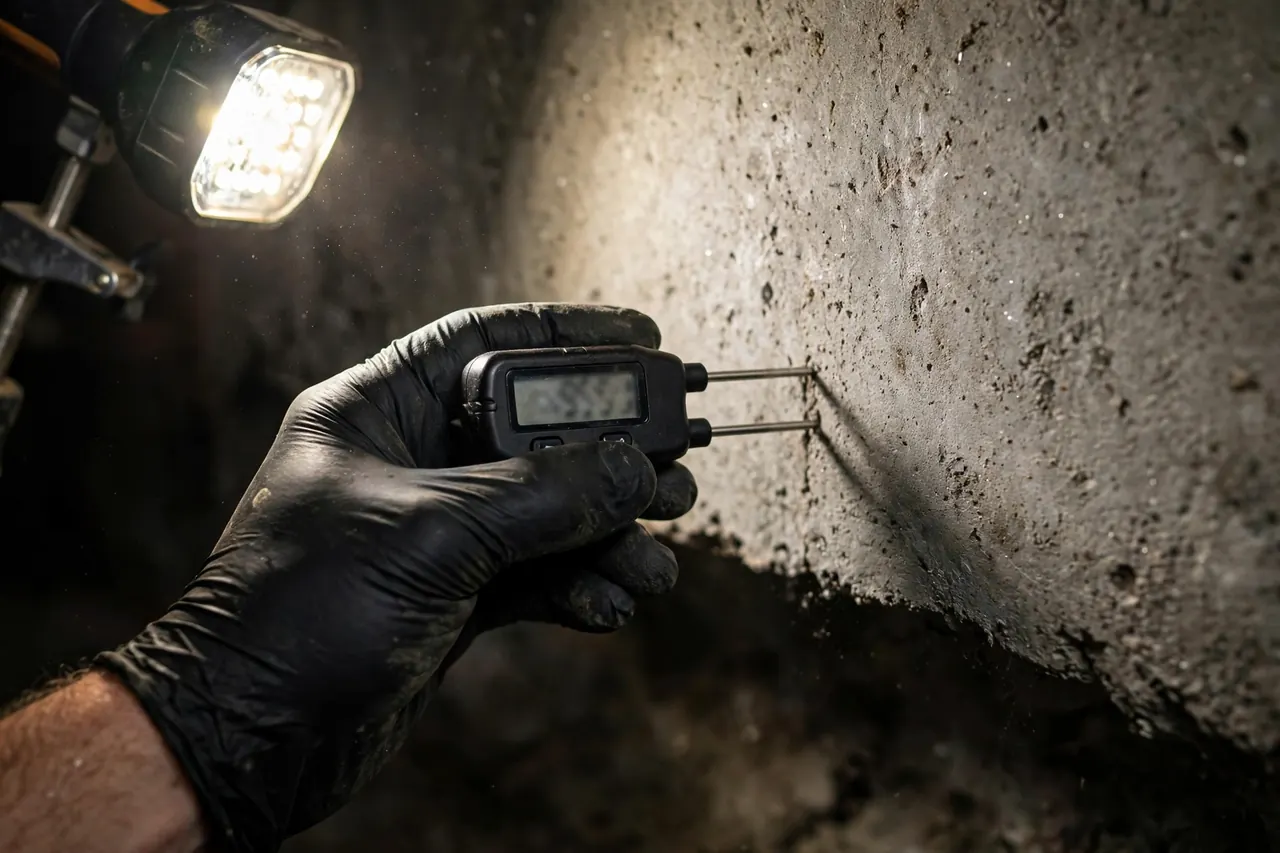
We walk the lot and the basement, then explain where your water comes from and your options, in plain language and in writing. You decide without pressure.
Get Your Poland Basement Checked
Slopes, historic walls, newer subdivisions, Poland has all of it, and each needs its own answer. Mahoning Basement Dry Co serves the village with inspections that account for terrain and home age, and work described honestly. Call (330) 555-0147 and tell us what your basement and your lot are doing.
Basement waterproofing in Poland - FAQs
Straight answers for Poland homeowners.
Because that is where the water comes from. Slope runoff flows downhill to your foundation's uphill wall, raising pressure there first. The pattern is actually good news, it tells us exactly where to focus.
Stone foundations need careful, conservative assessment, how water enters, the mortar's condition, whether anything is moving. We evaluate honestly and tell you when waterproofing is appropriate and when a structural engineer should look first.
Usually, yes, water is pooling at the door instead of draining away. The fix is getting the grade and drainage right at the entry, sometimes combined with interior drainage as backup. It is a common and fixable issue.
Regrading helps when it redirects uphill and surface water away from the foundation, swales, proper slope, downspout extensions. But if water is also rising from below or through the uphill wall under pressure, interior drainage handles what grading cannot.
Finish only after the water is managed, drainage in place, pump with backup, and a proven dry period through a wet season. Walkout basements are great living space once the water path is controlled; they are expensive mistakes before that.
A retaining wall holds soil, not groundwater. It can help with surface runoff if it is built with proper drainage behind it, but water moving through the soil will still reach your foundation. Do not count on a wall as waterproofing, it is landscaping, not a water barrier.
If water collects in them, yes. A window well on the uphill side of a slope is a bowl waiting to fill in a storm. Wells should drain freely, and the grade around them should carry water away from the house, not funnel it in.
Also serving nearby towns
Water in your Youngstown basement?
Call now, tell us what your basement is doing, and we’ll walk you through your options. No pressure.