
Sump Pump Installation in Youngstown, OH
Sump pumps usually fail quietly, and then loudly, during the worst storm of the year. Watch for:
Signs you need this service
Sump pumps usually fail quietly, and then loudly, during the worst storm of the year. Watch for:
The pump runs constantly, even in dry weather
The pump never runs, even when the pit fills with water
Strange noises
grinding, rattling, or humming without pumping
The pump is more than 7–10 years old
Visible rust or corrosion on the pump or pit
Water in the basement despite having a pump
No pump at all, just an open pit, or no pit
The float switch sticks or the pump short-cycles (turns on and off rapidly)
A pump that "mostly works" is not good enough. Pumps fail under load, during the heaviest rain, when you need them most.
What’s included
A proper installation is more than dropping a pump in a hole. Here is what we do:
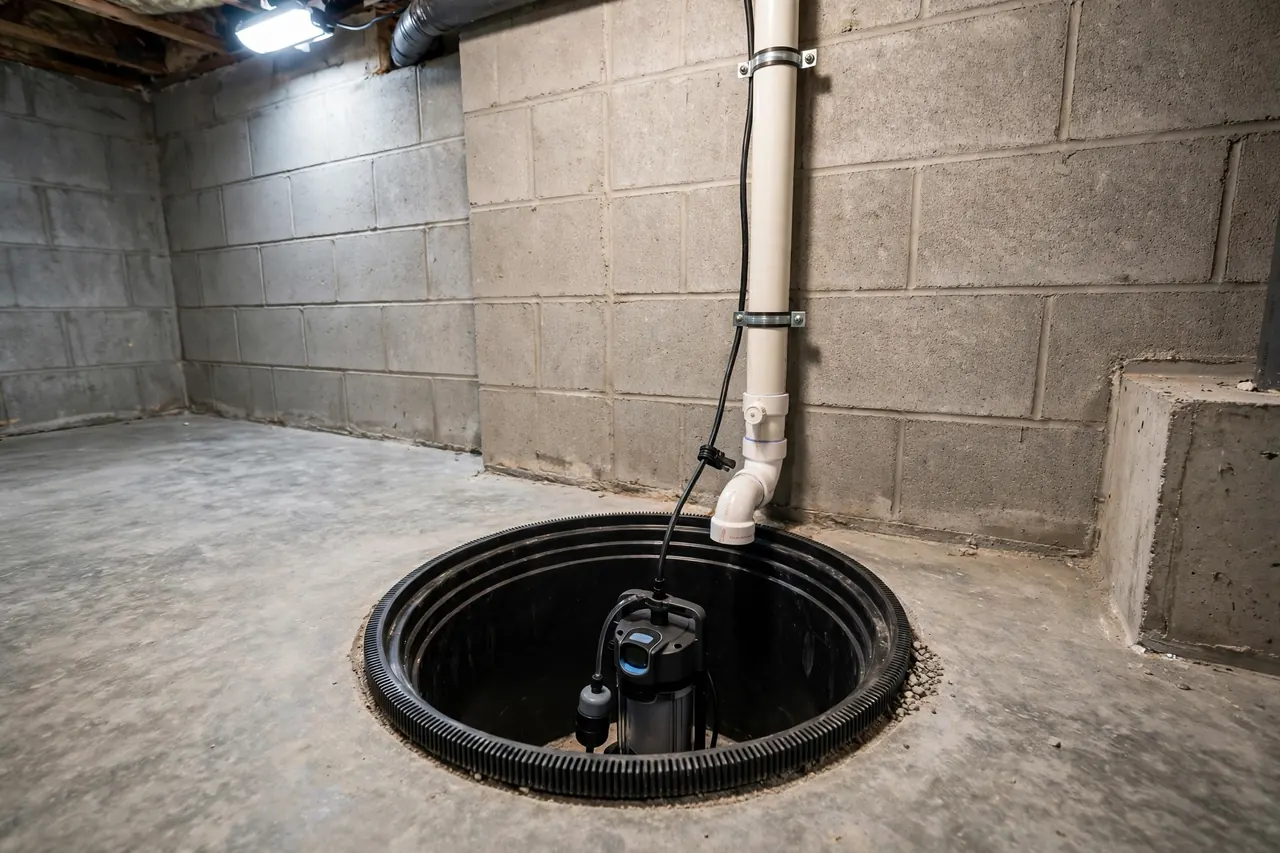
- Sump basin (pit) , a lined pit set into the basement floor at the system's lowest point, sized to the pump
- Pump , submersible or pedestal type, sized to your basement and water volume
- Check valve , keeps pumped water from flowing back into the pit when the pump shuts off
- Discharge line , pipe that carries water up and out of the house to a safe outlet away from the foundation
- Airtight cover , reduces noise, humidity, and radon entry through the pit
- Battery backup system (recommended) , a second pump or backup power source that runs when the power goes out
- Testing , the pump is run through full cycles before we leave, and you see it work
How the work goes
The mechanics are simple, and understanding them helps you spot problems early.
The pit collects water
The sump basin sits in a pit dug into the basement floor, usually in a corner or at the low point. Water from your interior drainage system, or from the soil directly, flows into the pit by gravity.
The float switch triggers the pump
Inside the pit, a float switch rises with the water level, like the float in a toilet tank. When water reaches a set height, the switch turns the pump on. When the water drops, the switch turns the pump off. This cycle runs automatically, day and night, without you doing anything.
The pump pushes water out
The pump lifts water up through the discharge pipe and out of the house. The check valve on the pipe stops water from draining back into the pit when the pump stops, without it, the pump would cycle endlessly.
The water goes away from the house
The discharge line carries water to a spot well away from the foundation, typically 10–20 feet out, downhill if possible. Dumping it right next to the house just recycles the same water back into the pit.
Timeline Expectations
- Pump replacement in an existing pit: a few hours, one visit
- New pit and pump: half a day to a full day
- Adding battery backup to an existing system: a few hours
- Pump as part of full interior drainage: included in the 1–3 day system installation
If your pump dies during a storm, call, a failed pump is the closest thing to a waterproofing emergency, because every hour without it is water on the floor.
Types of Sump Pumps
Submersible pumps
The pump sits inside the pit, underwater. These are the most common choice for homes: quieter, less visible, and they handle debris better. They cost more upfront but last longer in most installations.
Pedestal pumps
The motor sits on a pedestal above the pit, with only the intake in the water. They are louder and take up space, but the motor stays dry, which can extend its life. They are a reasonable budget option.
Battery backup pumps
A backup pump (or a backup power unit for your main pump) runs on a deep-cycle battery when the power goes out. In Youngstown, the heaviest storms often bring power outages, which is exactly when you need the pump most. We recommend backup systems for any home with a history of outages.
Do I Need a Battery Backup Sump Pump?
Ask yourself two questions:
- Does your power go out during storms? If yes, your primary pump is useless during the exact events that flood basements.
- How much water does your pit collect? If the pit fills fast during rain, even a short outage can mean water on the floor.
If you answered yes to either, a battery backup is worth it. It is one of the cheapest forms of flood insurance you can buy, commonly $500–$1,500 installed, versus thousands in water damage from one bad night.
How Long Do Sump Pumps Last?
Most sump pumps last 7–10 years with normal use. Pumps in homes with heavy water volume wear out faster; pumps that rarely run can seize up from sitting. There is no exact expiration date, but if your pump is approaching 10 years old, plan a replacement before it fails, not after.
How to extend pump life:
- Test the pump every few months by pouring water into the pit
- Keep the pit clear of debris, silt, and gravel
- Make sure the discharge line is not frozen, clogged, or discharging against the house
- Replace the check valve if you hear water rushing back into the pit
- Have the system checked if the pump starts cycling more often than usual
Benefits of a New Sump Pump
- Reliability when it matters. A new pump with a tested float switch works during the storm, not just during the test.
- Quieter operation. Modern submersible pumps are much quieter than old pedestal units.
- Flood protection during outages. With battery backup, the system keeps working when the power does not.
- Lower risk of a ruined basement. One prevented flood pays for the pump many times over.
- Works with your drainage system. A new pump restores full performance to an interior drainage system that was limited by a weak pump.
Sump Pump Sizing: What the Numbers Mean
Pumps are rated by horsepower (HP) and by how much water they move, gallons per hour (GPH) or gallons per minute (GPM) at a given lift height ("head").
- 1/3 HP, the standard residential size. Handles most basements with moderate water inflow.
- 1/2 HP, for basements with heavy inflow or a high lift (a deep pit or a long discharge run uphill).
- 3/4 HP and up, rarely needed in homes; usually for commercial or extreme water conditions.
Bigger is not automatically better. An oversized pump empties the pit too fast and short-cycles, turning on and off constantly. Short-cycling wears out the motor and the float switch prematurely. An undersized pump cannot keep up during heavy rain and runs until it burns out. The right size matches your pit, your inflow, and your lift height. That matching is part of what an inspection determines.
Head height matters. A pump rated at 3,000 GPH at zero lift might move half that lifting water 10 feet up and 20 feet out. We size for your actual lift, not the box rating.
Primary + Backup: The Combinations That Make Sense
Primary pump + battery backup pump
The standard recommendation. A second, battery-powered pump sits in the same pit (or a second pit) and takes over when the power fails or the primary pump cannot keep up. This is the setup we recommend most for Youngstown homes.
Dual primary pumps
Two electric primary pumps in a wide pit, with the second set to trigger at a higher water level. This covers extreme inflow, when one pump cannot keep up, the second kicks in.
Pros: handles the heaviest storms. Cons: both die in a power outage without a backup; more cost.
Water-powered backup pumps
These run on municipal water pressure, no electricity, no battery. When the pit fills, a valve opens and city water pressure drives the pumping action.
Pros: no battery to maintain or replace; runs indefinitely during outages. Cons: only works on municipal water (not wells); uses a significant amount of tap water while running; requires adequate water pressure. Check local plumbing codes, some municipalities restrict them.
What about generators?
A portable or standby generator can power your primary pump during outages. It works, but it is a whole-house decision with its own cost and maintenance, not something to buy just for the sump pump. A battery backup is simpler and cheaper for pump protection alone.
Discharge Lines: The Details That Matter
The discharge line is the unglamorous half of the system, and it causes a surprising share of pump "failures":
- Freeze protection. In Ohio winters, discharge lines can freeze where they exit the house or at the outlet. A frozen line means the pump runs against a blockage and burns out. We route and insulate to reduce this risk, and an air gap or freeze-relief fitting gives water somewhere to go if the outside section freezes.
- Where the water goes. The outlet should be 10–20 feet from the foundation, downhill if possible, and not onto a neighbor's property or a public sidewalk where it creates ice in winter.
- Check local rules. Some municipalities restrict where sump discharge can go (storm sewer vs. yard). We follow local requirements, and you should confirm them before rerouting a line yourself.
- Keep it clear. Leaves, mulch, and soil migrate to outlets. A twice-a-year check takes two minutes.
The Installation, Step by Step
For a new pit and pump:
- Pit location. The lowest point in the basement, or where water already collects. Away from the furnace and water heater if possible.
- Excavation. The floor is cut and a hole is dug to fit the basin, typically about 2 feet deep and 18 inches across, sized to the pump.
- Basin set. The basin is placed on a gravel bed, leveled, and the floor is patched around it.
- Pump placement. The pump sits in the basin on a solid base (not directly on gravel, which can clog the intake).
- Float switch check. The switch is positioned so the pump triggers before water reaches the floor, with enough range to avoid short-cycling.
- Check valve. Installed on the discharge pipe just above the pump, this is non-negotiable. Without it, pumped water flows back and the pump cycles forever.
- Discharge run. Pipe goes up, out through the rim joist or wall, and to the outlet point away from the house.
- Cover. An airtight cover goes on the basin, quieter, less humid, less radon entry.
- Backup (if included). The battery backup pump or power unit is installed and wired, with the battery on a maintainer.
- Full-cycle testing. We fill the pit and watch the pump run complete on/off cycles. You see it work before we leave.
Why Youngstown Homes Depend on Sump Pumps
Clay soil and high water tables
The Mahoning Valley's clay holds water against foundations, and areas near the Mahoning River sit over a high water table. Pumps here work harder than in sandy-soil regions, and they work often.
Lake-effect storms
Heavy, fast rain events are when basements flood. A pump sized for "average" rain fails during the storm that matters. We size for real local conditions.
Storm-related outages
The same storms that fill sump pits knock out power. That is why battery backup is not an upsell here, it is practical protection.
Older homes, older pumps
Many Youngstown homes still run the original pump from a system installed decades ago. If yours is past 10 years, it is living on borrowed time.
Homeowners in Warren, Niles, and Girard, many with mid-century homes near the river corridor, call us about pumps more than almost any other single item.
Not sure where to begin? Mahoning Basement Dry Co walks through the whole process. We do this work across the towns we serve around Youngstown.
Why Choose Mahoning Basement Dry Co
Pumps are our daily work
We install and service sump pumps as part of basement waterproofing every week, not as an occasional add-on.
We size honestly
An oversized pump short-cycles and burns out; an undersized one cannot keep up. We match the pump to your pit and water volume.
We test in front of you
You will see the pump run full cycles before we leave, not just hear that it "should work."
Battery backup is standard advice, not a surprise
We will explain the outage risk for your street and let you decide.
Written scope, clear price
You approve the work and the cost before anything is scheduled.
What affects the cost
These are typical industry estimates, not a quote from us:
- Sump pump replacement (pump, installed in existing pit): commonly $500–$1,500
- New sump pit and pump installation: commonly $1,000–$2,500
- Battery backup system: commonly $500–$1,500 installed
- New pump as part of a full interior drainage system: included in the system price (commonly $4,000–$12,000 total)
What affects the price: whether a pit already exists, the type of pump, whether a backup system is added, and how far the discharge line must run.
When to Call a Pro
Call immediately when:
- The pump is not running and the pit is full or water is on the floor
- The pump runs constantly without lowering the water
- You hear grinding or the pump hums without moving water
- The circuit breaker for the pump keeps tripping
Call soon (not an emergency) when:
- The pump is 7–10 years old and has never been serviced
- You have no battery backup and your street loses power in storms
- The discharge line freezes every winter
- You are buying a home and want the pump checked before closing
Reasonable DIY: swapping a like-for-like pump in an existing pit, testing the pump with a bucket of water, clearing a clogged outlet. Not DIY: digging a new pit, sizing an unfamiliar system, or wiring a backup, mistakes here flood basements.
Serving Youngstown and 10 nearby towns
Common questions
Straight answers about sump pump installation in Youngstown.
Water flows into a pit in the basement floor by gravity. A float switch turns the pump on when the water rises, the pump pushes water out through a discharge line away from the house, and the pump shuts off when the pit empties. It runs automatically.
If your power goes out during storms, yes, strongly recommended. The primary pump cannot run without power, and outages tend to happen during the heaviest rain. A backup system keeps pumping through the outage.
Typically 7–10 years. Heavy-use pumps wear out faster; rarely-used pumps can seize. If yours is near 10 years old, replace it on your schedule, not during a flood.
Possible causes: a stuck float switch, a failed check valve letting water flow back, a high water table, or a pump that is undersized for the inflow. Constant running wears the pump out fast, get it checked.
A straightforward pump swap in an existing pit is doable for a handy homeowner. Digging a new pit, running discharge lines, and sizing the system are professional jobs, a poorly placed pit or bad discharge line can make things worse. If you are unsure, call us at (330) 555-0147 and we will advise honestly.
It goes through the discharge line to a point well away from the foundation, usually 10–20 feet out. We make sure it does not just run back toward the house or onto a neighbor's property.
Every few months, and before every spring. Pour a bucket of water into the pit until the float triggers. Watch it pump down and shut off. If it does not trigger, triggers late, or cannot empty the pit, get it serviced.
Pedestal pumps are inherently louder than submersible ones. On a submersible, loud rattling or banging often means the pump is vibrating against the basin wall, the check valve is slamming, or the intake is partially clogged. A pump that suddenly gets louder is telling you something, do not ignore it.
No. Sump pumps move groundwater, relatively clean water. Sewage requires a sewage ejector pump, which is a different, sealed system. Never let sewage enter a sump pit; it is a health hazard and will destroy a standard pump.
For most Youngstown basements, a 1/3 HP submersible pump is the starting point. Heavy inflow, deep pits, or long uphill discharge runs may call for 1/2 HP. The honest answer depends on your pit and water volume, which is why we size during inspection rather than guessing.
Buried lines look cleaner and avoid trip hazards, but they are harder to inspect and can freeze underground in shallow frost zones. Above-ground lines are easy to check and clear. Either can work, the key is that the outlet stays clear and the line cannot freeze shut.
It depends on the battery size, the pump, and how much water is coming in. A typical deep-cycle battery setup runs a backup pump intermittently for several hours of heavy inflow, often enough to ride out a storm-related outage. The battery needs periodic replacement (commonly every 3–5 years) and should stay on a maintainer.
Related waterproofing services
Is Your Pump Ready for the Next Storm?
Do not find out your pump is dead during a downpour. Call Mahoning Basement Dry Co, we will check your pump, your pit, and your discharge line, and tell you straight whether you are protected or exposed. If you need a replacement or a battery backup, you will get a clear written price first.
Call today.