
Interior vs Exterior Basement Waterproofing: Which Is Better?
Here is the full comparison so you can decide.
Direct answer: There is no single "better" option. Interior waterproofing (drain systems installed under the basement floor) is cheaper, faster, and works well for most seepage problems. Exterior waterproofing (digging around the foundation to seal it from outside) costs much more but is the right call when the foundation wall itself is damaged. Most Youngstown homeowners end up with interior systems.
Here is the full comparison so you can decide.
What Interior Waterproofing Is
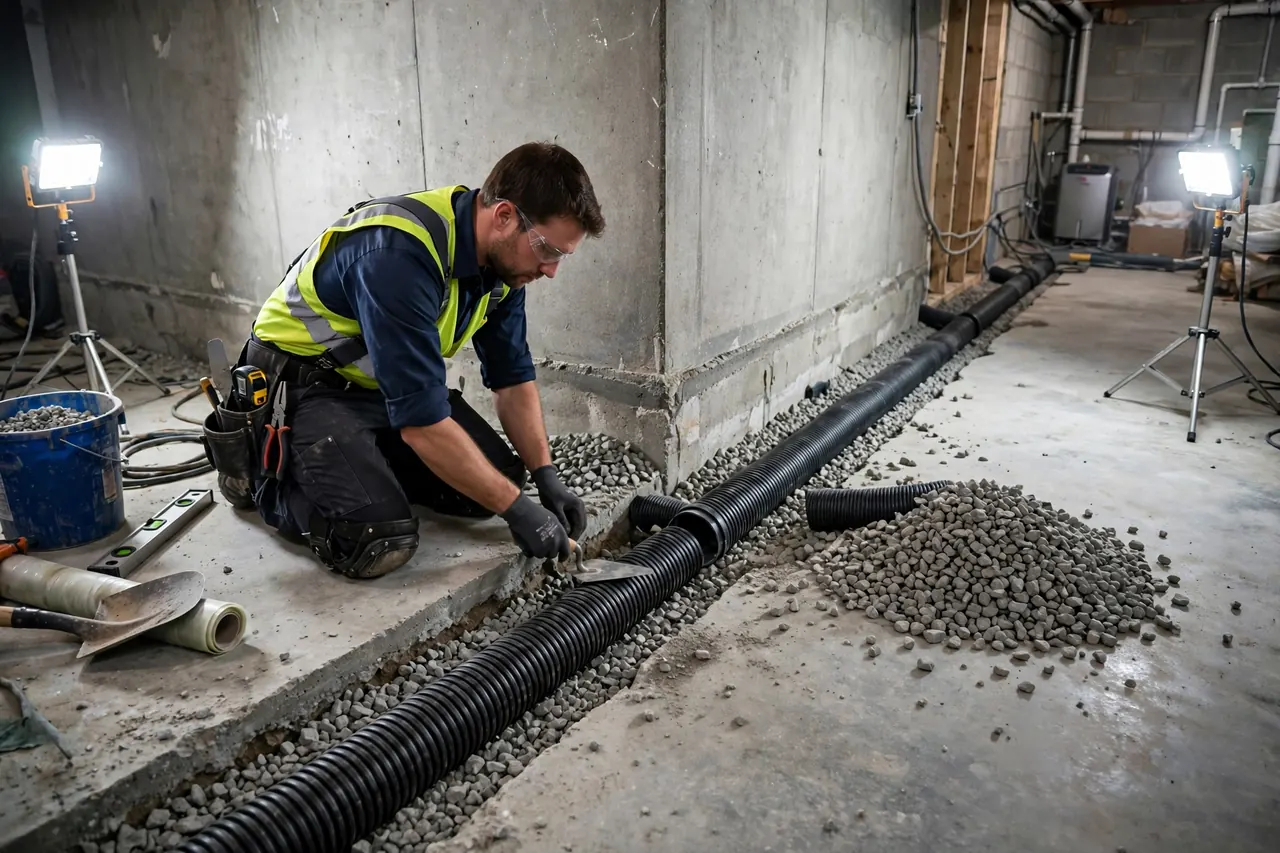
Interior waterproofing manages water after it gets through the wall. A trench is cut around the inside perimeter of your basement floor, perforated drain pipe is laid in gravel, and the floor is patched back over. Water that seeps in hits the drain, flows to a sump pump, and gets pumped away from the house.
It does not stop water from entering the concrete. It controls the water so it never reaches your floor or belongings. This matters because of hydrostatic pressure, the force of groundwater pushing against your foundation. Interior systems don't fight that pressure; they give the water somewhere easier to go.
What Exterior Waterproofing Is
Exterior waterproofing stops water before it enters. Crews excavate soil all the way down to the footing around your foundation, clean the wall, apply a waterproof membrane or coating, install new exterior drain tile, and backfill.
It is the more complete fix, but it requires heavy excavation around your home, which is why the cost is so high.
Head-to-Head Comparison
| Factor | Interior | Exterior | |---|---|---| | Typical cost | Lower (no digging) | Much higher (excavation) | | How long it takes | Usually 1–3 days | Usually 3–7 days | | Disruption | Some indoor dust and noise | Landscaping, decks, driveways may be torn up | | Weather limits | Can be done any season | Harder in frozen winter ground | | What it fixes | Seepage, wall-floor joint leaks, water under the slab | Exterior wall damage, failed outside drains | | Structural help | None, water management only | Can include wall repair during excavation |
Why Interior Usually Wins on Value
For most seepage problems, water coming through the wall-floor joint, minor cracks, damp walls, an interior system solves it. You get a dry basement without tearing up your yard, patio, or driveway. The work happens inside, in any weather, in a few days.
This is why most quotes in the Youngstown area lean interior: our clay soil and older block foundations respond well to perimeter drainage, and homeowners prefer not to lose their landscaping.
When Exterior Is the Right Call
Exterior waterproofing makes sense when:
- The exterior wall is damaged, crumbling block, deteriorated mortar, structural cracks
- Exterior drain tile has completely failed and replacement is needed
- The yard or foundation is already being excavated for other work
- You want the wall sealed from outside as well as drained inside (belt and suspenders)
If a structural engineer finds wall movement or serious damage, exterior work is often part of the fix, interior drainage alone cannot repair a failing wall.
Can You Do Both?
Yes, and some homes need it. A common setup: interior perimeter drain with a sump pump for water management, plus exterior membrane work on the worst wall. A good contractor will tell you honestly when one method is enough.
Be wary of anyone who pushes exterior excavation for every job. It is the most expensive option, so some companies lead with it. Get a second opinion if exterior is the only option offered for simple seepage. A trustworthy contractor explains why a method fits your specific foundation, the soil type, the water source, and the condition of the wall, instead of selling the same system to every house on the block.
What About Youngstown Weather?
Freeze-thaw cycles matter here. Ohio winters drive water into tiny cracks, freeze it, and widen the damage year after year. Exterior membranes can crack under that stress too, which is one reason interior systems are popular: they are protected inside the basement, away from the freeze.
That said, proper grading and gutters, keeping roof water away from the foundation, help both methods last. Water management starts outside.
What About Warranties?
Ask every contractor what their warranty actually covers, in writing. Some warranties cover only the specific wall that was treated, not the whole basement. Others exclude certain water sources. A warranty is only as good as its fine print, so read it before you sign, not after the next storm.
Questions to Ask Before You Choose
- What is the actual water source? (Interior handles seepage; wall damage may need exterior.)
- What is included in each quote? Compare scope, not just price.
- Will landscaping, concrete, or driveways be restored after exterior digging?
- What does the discharge setup look like? Both methods need water directed away from the home.
Three Houses, Three Answers
It helps to see how the choice plays out in real situations. These are illustrative examples, your home needs its own inspection.
House 1: 1960s ranch in Boardman, poured walls, seepage at the floor joint. Water comes in along the wall-floor seam after heavy rain. Walls are sound, no structural issues. Interior drainage is the clear fit, it catches the seepage where it enters, costs far less than digging, and the yard stays intact.
House 2: 1920s home in Youngstown, block foundation, crumbling mortar and bowing wall. Water enters through deteriorated mortar joints, and the wall is visibly bowing inward. Exterior work plus structural repair is the answer here. An interior drain alone cannot fix a failing wall, the wall needs stabilization first, and exterior excavation lets the crew repair and seal it properly.
House 3: 1980s colonial in Canfield, one bad wall. Three walls stay dry, but the north wall leaks through several cracks and the exterior grade slopes toward it. The fix might be crack repair plus regrading, or an interior drain on just that side. A full exterior excavation would be overkill.
The lesson: the right method follows the diagnosis. Same symptom (wet basement), three different causes, three different fixes.
What a Good Installation Looks Like
Whether you choose interior or exterior, quality matters more than the method. Here is what to look for:
Good interior installation:
- Trench cut cleanly along the perimeter, deep enough to sit beside the footing
- Perforated pipe bedded in washed gravel, sloped toward the sump pit
- Filter fabric keeping silt out of the system
- Sump pit properly sized, with a quality pump and a sealed lid
- Discharge line running well away from the house (10–20+ feet)
- Concrete patched back smoothly, wall sealed where it meets the floor
Good exterior installation:
- Excavation all the way to the footing, not a shallow trench
- Wall cleaned and inspected before any coating goes on
- Proper waterproof membrane (not just a coat of tar) applied to a dry, prepped wall
- New exterior drain tile in gravel, sloped to daylight or a sump
- Backfill done in layers and compacted, not just pushed back in
- Grading restored so water slopes away from the house
If a contractor cannot describe these steps, keep looking.
Hybrid Approaches: When One Method Is Not Enough
Some homes genuinely need both:
- Interior drain + exterior membrane on the worst wall. The interior system manages overall seepage; the exterior membrane seals the wall that takes the worst beating.
- Interior drain + structural wall anchors. The anchors stabilize a bowing wall; the drain handles the water.
- Exterior drains + interior backup. Common in new construction on problem lots, belt and suspenders from day one.
A contractor who only sells one method will recommend that method for every house. A good one mixes and matches based on what your foundation actually needs.
Frequently Asked Questions
Can I do interior waterproofing in just one section of the basement? Yes. If water only enters along one wall, a partial system on that side is a legitimate option. But be honest about the scope, if the whole perimeter seeps, a partial fix just moves the problem.
Will interior waterproofing lower my basement humidity? It reduces the biggest moisture source (seepage), which usually drops humidity noticeably. But it does not dehumidify the air, pair it with a dehumidifier for the driest result.
Does exterior waterproofing last longer than interior? Not necessarily. Exterior membranes face freeze-thaw, soil pressure, and root intrusion. Interior systems sit protected inside the basement. Both last decades when installed well; the sump pump is the part that wears out in either case.
Can I waterproof from inside if my basement is finished? Yes, but the finished walls along the work area need to come down first. Factor drywall removal and rebuild into the project, it is often the most disruptive part of an interior job in a finished basement.
Which method adds more resale value? Buyers care about a dry basement, not which method dried it. Either professionally installed system with documentation is a strong selling point. Keep your contract and warranty paperwork for the sale file.
Is one method better for clay soil? Interior systems tend to perform more reliably in Youngstown's clay, because exterior drain tile can clog with fine clay silt over decades, and you cannot easily service a buried exterior pipe. Interior systems are accessible if they ever need attention.
The Bottom Line
Interior waterproofing is the right choice for most Youngstown seepage problems, cheaper, faster, effective. Exterior waterproofing is for damaged walls or failed exterior drains. Neither is "better" in general; the right one depends on your foundation.
Not sure which fits your home? Call (330) 555-0147 for an inspection. We will show you exactly what is going on and which approach makes sense, no upsell to the expensive option unless it is actually needed.
Internal links: Basement Waterproofing in Youngstown, OH · Interior Drainage Systems · Foundation Repair · Gutter & Downspout Services
Water in your Youngstown basement?
Call now, tell us what your basement is doing, and we’ll walk you through your options. No pressure.