
7 Signs Your Basement Needs Waterproofing
Here is what each sign means, and which ones you should not ignore.
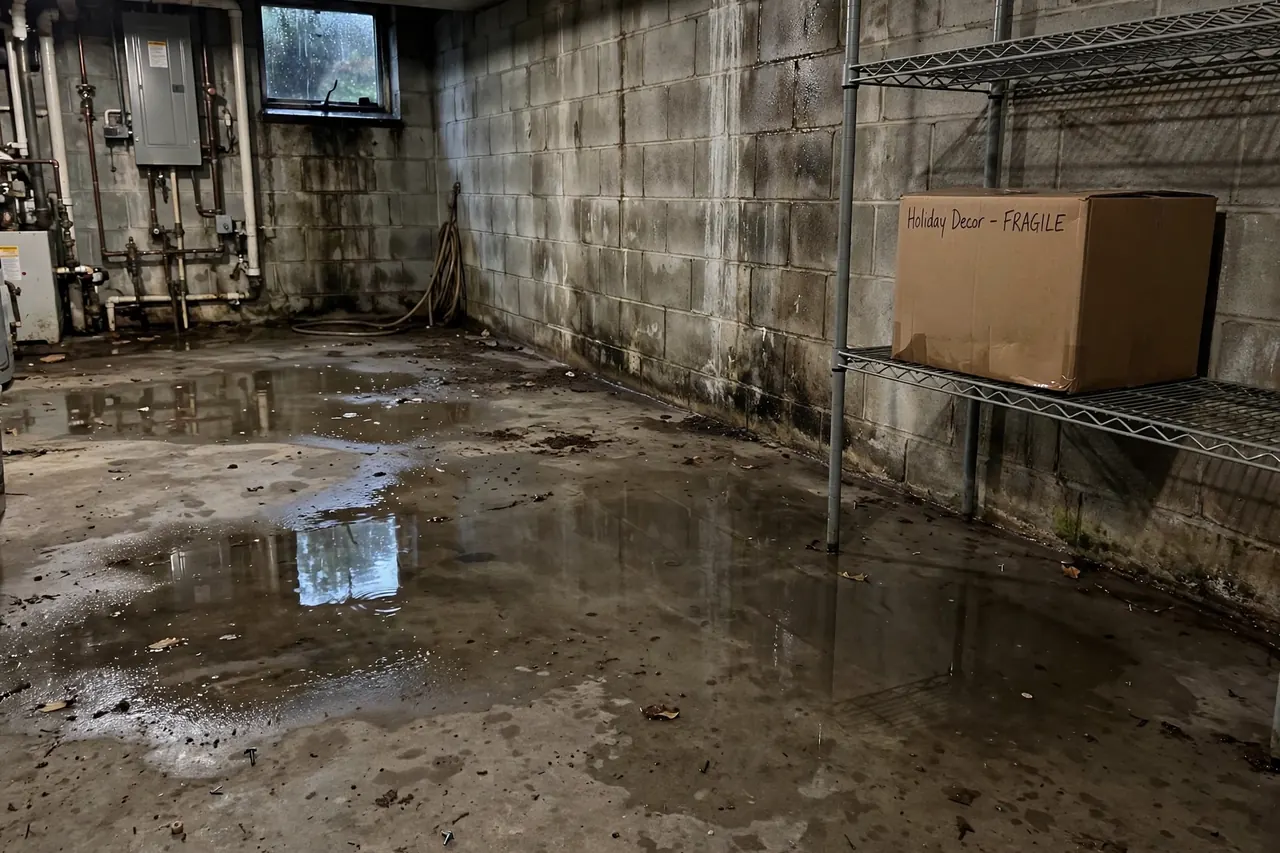
Direct answer: Your basement likely needs waterproofing if you see standing water, water stains, damp walls, musty smells, white crusty deposits on walls, visible cracks that leak, or peeling paint. One sign alone deserves a look. Two or more usually means water is getting in regularly and it is time to act.
Here is what each sign means, and which ones you should not ignore.
1. Water Puddles or Standing Water
This is the most obvious sign. If you find puddles after rain, water is getting in somewhere. It may come through cracks, over the top of the foundation wall, or up through the floor.
Act on this one right away. Standing water damages everything it touches, flooring, drywall, stored belongings, and the foundation itself.
2. Water Stains on Walls or Floor
Brown or yellow stains on concrete walls or along the floor are dried evidence of past water entry. They often look like tide marks, a line where water sat and dried.
Even if it is dry right now, the stain proves water was there. And water that came in once will come in again. In Youngstown, heavy spring rains and lake-effect storms put basements to the test repeatedly.
3. Damp or Moist Walls
Put your hand on the basement wall after a rain. If it feels damp, water is working its way through the concrete. Concrete looks solid, but it is porous, it absorbs water like a sponge.
Damp walls that never fully dry are a classic sign of seepage through the foundation. This is where an interior drainage system does its best work: it catches water at the wall-floor joint before it spreads.
4. White, Crusty Deposits (Efflorescence)
See white, chalky patches on your basement walls? That is efflorescence, mineral salts left behind when water passes through concrete and evaporates.
It is not mold. It is a sign that water is moving through your walls. A little near the bottom of a wall can be minor. Heavy buildup or deposits that keep returning mean steady water movement.
5. Musty, Damp Smell
A musty basement smell is not just "how basements smell." It is the smell of moisture feeding mold or mildew somewhere, behind drywall, under carpet, or in wall cavities.
Your nose finds moisture your eyes miss. If guests mention it or you notice it every time you go downstairs, water is in the picture. Mold needs moisture to grow, so the smell is really a moisture alert.
6. Visible Cracks That Leak
Hairline cracks in poured concrete are common and do not always leak. But if you see a crack that drips or stains during rain, it is an active entry point.
Watch especially for:
- Cracks that get wider over time
- Cracks that run horizontally along the wall
- Stair-step cracks in block walls
Horizontal and widening cracks deserve a structural engineer's opinion, not just a waterproofing fix. See our guide to foundation cracks that leak for more detail.
7. Peeling Paint or Bubbling Wall Coverings
Paint peeling off basement walls usually means moisture is pushing it off from behind. The same goes for wallpaper or wall coverings that bubble or pull away.
Paint is not waterproofing. Products like sealer paint can manage light seepage, but they do not stop water driven by hydrostatic pressure, moisture pushes them right off the wall.
A 10-Minute Basement Check You Can Do Today
You do not need special tools. Grab a flashlight and walk your basement slowly after the next rain:
- Shine the light along the wall-floor joint, the most common leak point.
- Look behind stored boxes and furniture, where water hides.
- Check window wells from inside for dampness around the frame.
- Sniff for mustiness in corners and closets.
- Look at the ceiling joists for water stains from plumbing above.
Write down what you find with the date. That simple log becomes valuable if you later call a professional, it shows how the problem is changing over time.
Quick Triage: Urgent vs. Watch-and-Wait
Act soon (call for an inspection):
- Standing water or active leaks
- Rapidly widening cracks
- Horizontal cracks in the wall
- Strong musty smell spreading to the main floor
Watch and monitor:
- Light efflorescence in one spot
- A single hairline crack that is dry
- Slight dampness only during the heaviest rain
Even "watch" items deserve a check if they change. Basements do not improve on their own, moisture problems grow.
Why Youngstown Basements Are Vulnerable
This region is hard on basements. Clay soil holds water against your foundation instead of draining it away. Many Mahoning Valley homes are decades old, with block foundations and drain tile that has been underground since the house was built.
Add in freeze-thaw cycles, water freezing in small cracks all winter and thawing in spring, plus heavy lake-effect rain, and you get basements that need attention more often than newer construction on sandy soil.
Signs That Show Up by Season
Different signs appear at different times of year. Knowing the seasonal pattern helps you catch problems early.
Spring: This is leak season. Thaw and heavy rain hit foundations at their weakest, cracks widened by winter freeze-thaw now leak for the first time. Watch for new puddles, fresh stains, and damp spots that were not there in fall.
Summer: Humid air condenses on cool basement walls and pipes. Musty smells peak. This is condensation season more than leak season, but summer storms still test your drainage.
Fall: The setup season. Rain soaks into cracks before the first freeze. This is the best time to inspect, because you can still fix things before winter.
Winter: Freeze-thaw does its damage silently, underground and inside the concrete. You may not see new signs until spring, but if your basement smells mustier in winter, moisture is trapped and not drying.
Finished Basements Hide the Signs
If your basement is finished, water hides behind drywall and under flooring. The signs change:
- Baseboards that swell, warp, or pull away from the wall
- Carpet that feels damp in spots or smells musty
- Drywall with bubbling paint or soft spots near the floor
- A musty smell with no visible source, the water is behind the walls
Finished basements need extra attention because damage spreads unseen. If you smell mustiness in a finished basement, do not assume it is nothing. Pull back a corner of carpet or check behind a baseboard, or call for an inspection before the hidden damage grows.
Cheap Tools That Make Checking Easier
You do not need professional gear, but a few inexpensive tools help:
- A bright flashlight. Water shines. Sweep the beam low along walls and the floor joint after rain.
- A moisture meter ($25–$50). Press it against walls and wood. It gives you a number instead of a guess, and numbers let you track whether a spot is getting wetter over months.
- Your phone camera. Dated photos of stains and cracks turn "I think it's worse" into proof.
- A humidity gauge. If basement humidity regularly sits above 60%, you have a moisture problem even without visible water.
None of these replace a professional inspection. But they turn vague worry into concrete observations.
What to Tell a Contractor When You Call
When you call for an inspection, the more you can describe, the faster the diagnosis:
- What you see, puddles, stains, damp walls, smells, cracks.
- When it happens, only in heavy rain, every spring, all the time.
- Where, which walls, which corners, near windows or the floor joint.
- How long, when you first noticed it, and whether it is getting worse.
- What you have tried, paint, dehumidifier, extended downspouts.
Bring your photos and your dated notes. A good contractor will listen to all of it before recommending anything.
Frequently Asked Questions
My basement smells musty but I can't find any water. Is that still a problem? Yes. Musty smell means moisture somewhere, behind drywall, under flooring, or in wall cavities. Your nose often finds what your eyes miss. Get it checked.
One wall is damp after heavy rain but there's no puddle. Should I worry? Damp walls are an early sign of seepage. It may stay minor for years, or it may be the first stage of a growing problem. Monitor it with dated photos and consider an inspection.
Are wet basements just normal in old Youngstown houses? Common is not the same as normal or harmless. Many older homes have wet basements, but every wet basement is slowly damaging the foundation, feeding mold, and hurting the home's value. "Everybody has it" is not a reason to ignore it.
Can I just run a dehumidifier instead of waterproofing? A dehumidifier handles humidity in the air. It does not stop water coming through walls or the floor. If you have active seepage, you need waterproofing, the dehumidifier is a complement, not a replacement.
How often should I check my basement? Walk it after every heavy rain, and do a thorough seasonal check in fall and spring. Five minutes with a flashlight a few times a year catches problems when they are small.
What to Do Next
Walk through your basement with this checklist after the next heavy rain. Look at walls, floor joints, windows, and utility areas. Take photos of anything you find, they help a professional diagnose the problem faster.
Spotted one or more of these signs? Call (330) 555-0147 to schedule an inspection. We will tell you exactly what is going on and what your options are.
Internal links: Basement Waterproofing in Youngstown, OH · Foundation Crack Repair · Sump Pump Installation · Basement Dehumidification
Water in your Youngstown basement?
Call now, tell us what your basement is doing, and we’ll walk you through your options. No pressure.